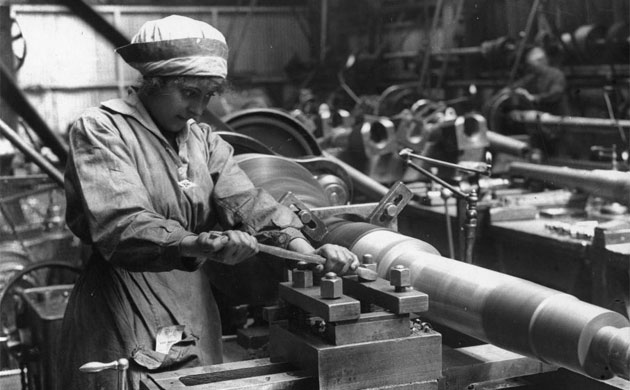
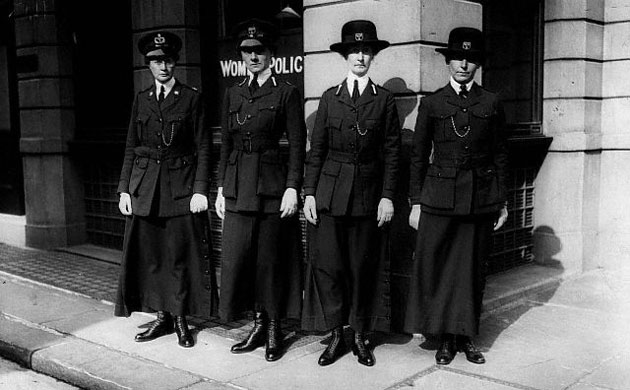
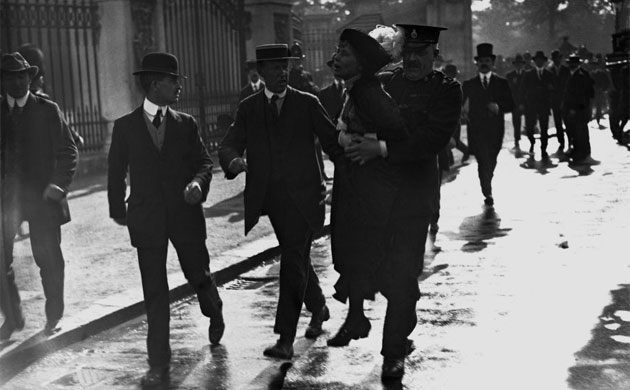
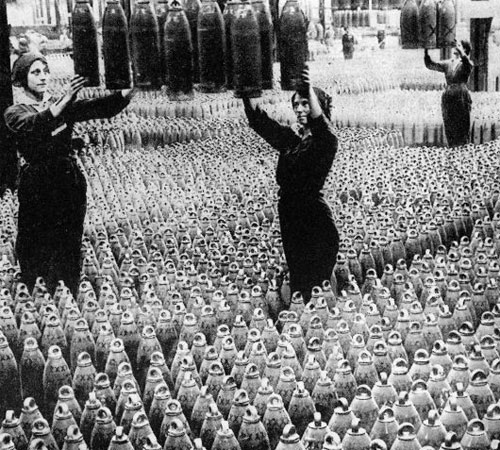
Many women found work in munitions factories during the war leaving some propagandists the task of trying to reconcile this direct contribution to the slaughter on the front with the so-called traditional feminine role of 'life-giver'.Photograph: GettyAs soon as war broke out women began to take on roles previously reserved for men, from law enforcement to the civil service and from the post office to farm labouring.Photograph: CorbisThe suffragette leader, Emmeline Pankhurst, is arrested outside Buckingham Palace in May 1914, a matter of months before the outbreak of hostilities. Admiration for womens' war work was a useful factor in accelerating the struggle and bringing about the Representation of the People's Bill in 1917. Full voting equality wasn't achieved until 1928, however. Photograph: Corbis
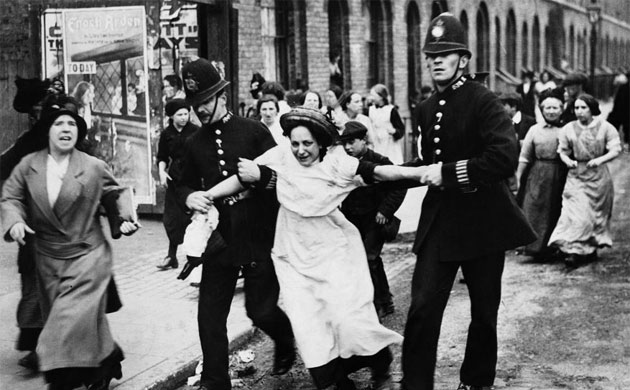
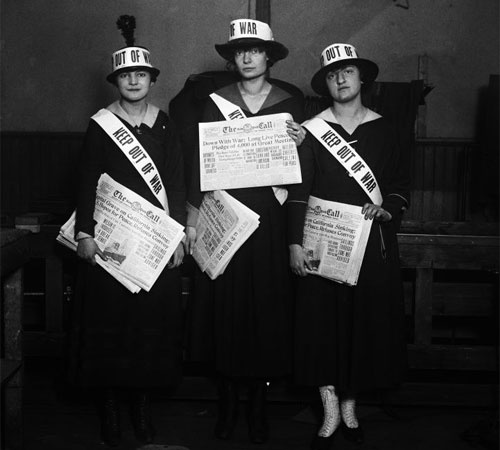
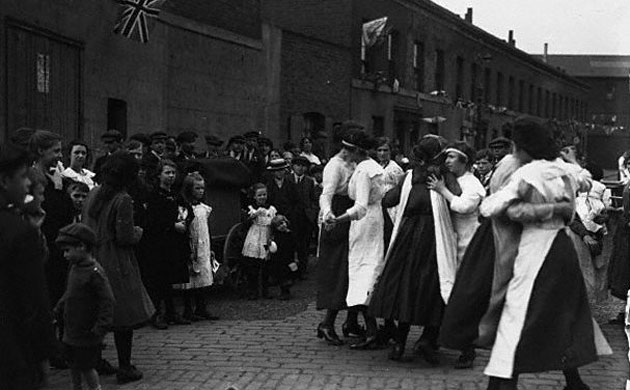
There were anti-German riots in Britain from the start of the war, only heightened by events such as the sinking of the Lusitania in 1915. Given that many of them would already have lost husbands, sons and brothers at the front, the enthusiastic participation of some women wasn't surprising.Photograph: CorbisRose Cohn, journalist Dorothy Day and Charlotte Margolies wearing sashes stating "Keep Out of War" in protest against the US joining the war.Photograph: CorbisOne woman writing for the magazine of a projectile factory she was working in said: "the fact that I am using my life's energy to destroy human souls gets on my nerves". She was proud that she was "doing what I can to bring this horrible affair to an end. But once the war is over, never in creation will I do the same thing again".Photograph: GettyWomen dance together in the East End of London to celebrate the war's end - how many were lucky enough to be expecting sweethearts home from the front? Returning soldiers were certainly to find that British society and the role of women in particular had changed since August 1914.Photograph: Corbis
Sign up to read this article
Read news from 100’s of titles, curated specifically for you.