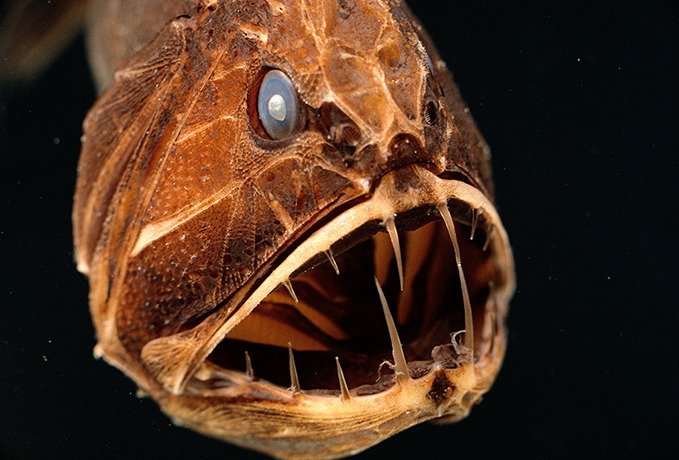
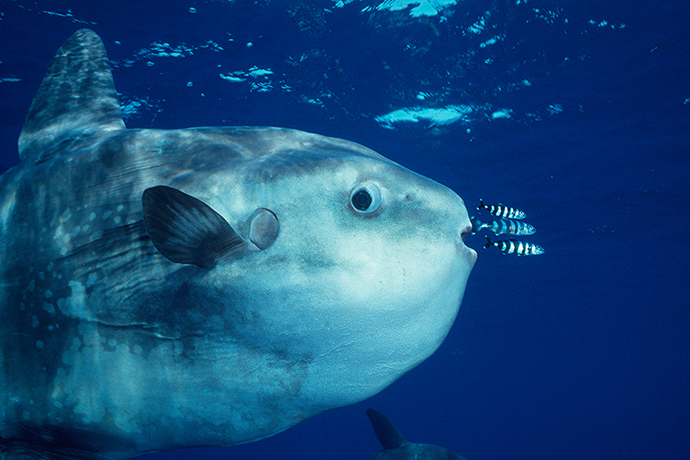
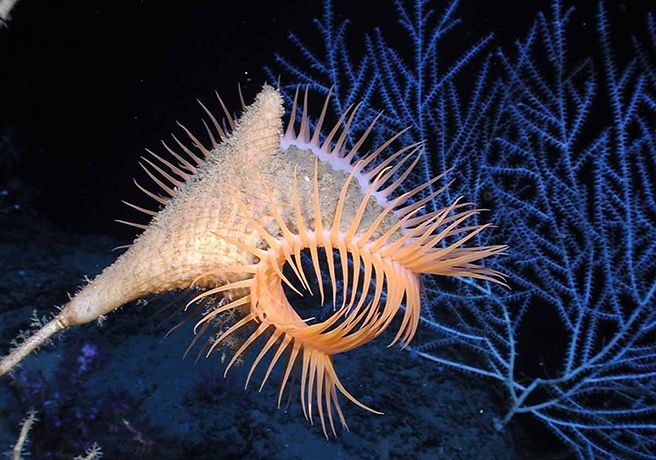
With its sharp teeth and forbidding appearance it’s no surprise that the Anoplogaster cornuta acquired the sobriquet ‘fangtooth’. At around 6in long, its prey includes other fish but when its jaw isn’t dropping its long lower fangs occupy scabbard-like sheaths inside its headPhotograph: Minden/CorbisWith a penchant for floating on its side to soak up the rays, the mola mola is better known as the ocean sunfish, although its Latin name refers to its resemblance to a millstone. Growing to around 10ft in length, it is the heaviest bony fish in the sea, but happily it views humans with friendly curiosityPhotograph: Richard Herrmann/Getty ImagesThis is one Venus fly trap you won’t find growing on a window sill. Named for its resemblance to the plant, anemones of the genus Actinoscyphia use their tentacles to catch and sting prey. They can also eject bioluminescent matter that sticks to predators, potentially turning the hunter into the huntedPhotograph: I. MacDonald
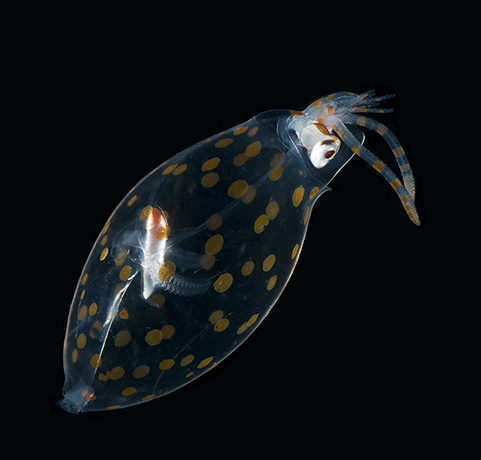
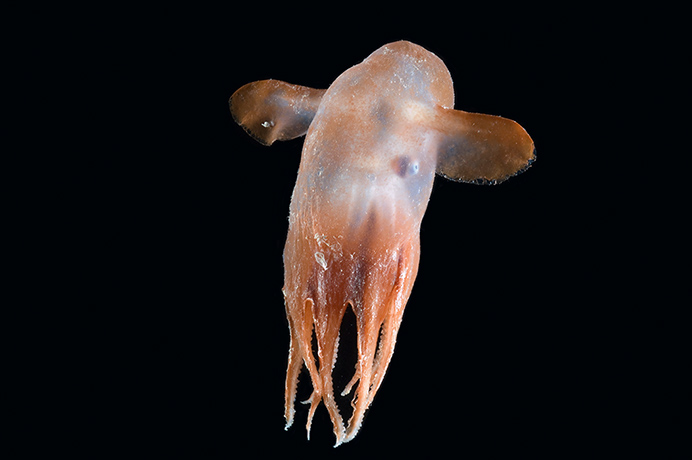
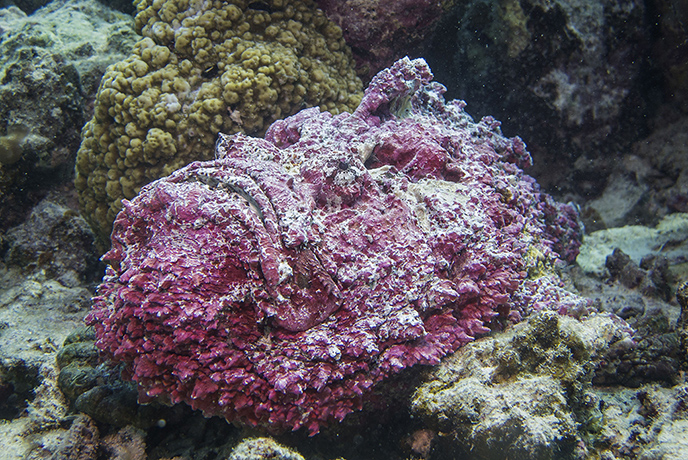
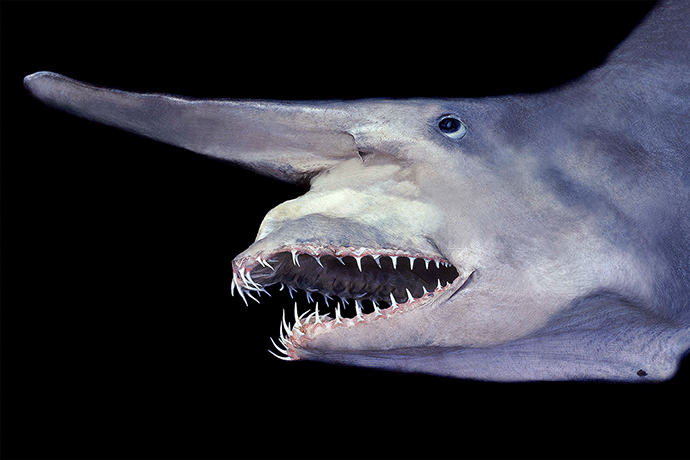
Often transparent and bioluminescent, glass squids such as Galiteuthis phyllura use their light to counter the shadows produced by their eyes, allowing them to slip under the radar of predators. They belong to the same family, Cranchiidae, as the colossal squid and make use of a special ammonium-filled organ to help control buoyancyPhotograph: Nature Picture Library/RexDubbed “dumbo octopuses”, species of the genus Grimpoteuthis are named not for their IQ but for their resemblance to the plucky Disney hero, although they are only a few inches tall. Their “ears” are fins that, together with their webbed arms, are used to flit about thousands of feet below the ocean’s surface Photograph: David Shale/deepseaimages.co.ukLurking in shallow, warm waters and on coral reefs, stonefishes such as the species Synanceia verrucosa are no stranger to Australia. With a gnarled exterior it is well camouflaged but step on one at your peril: its venom can killPhotograph: Image Broker/RexAn elusive inhabitant of the deep seas the goblin shark, Mitsukurina owstoni, can grow to up to 12ft. Its distinctive nose contains an organ that allows it to detect weak electric fields, such as those created by prey, enabling it to hunt out its quarryPhotograph: David Shen/SeaPics.com
Sign up to read this article
Read news from 100’s of titles, curated specifically for you.