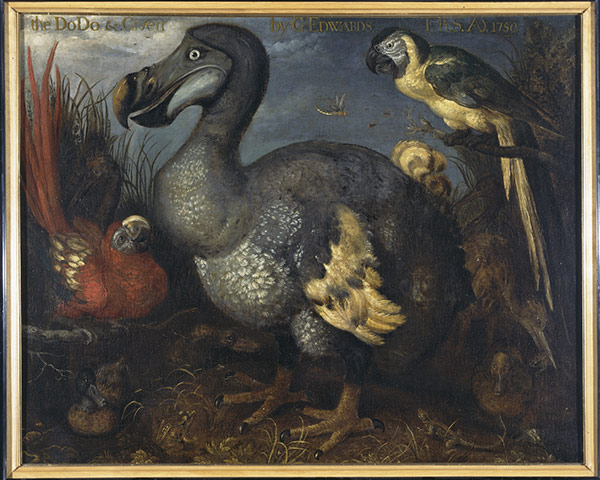
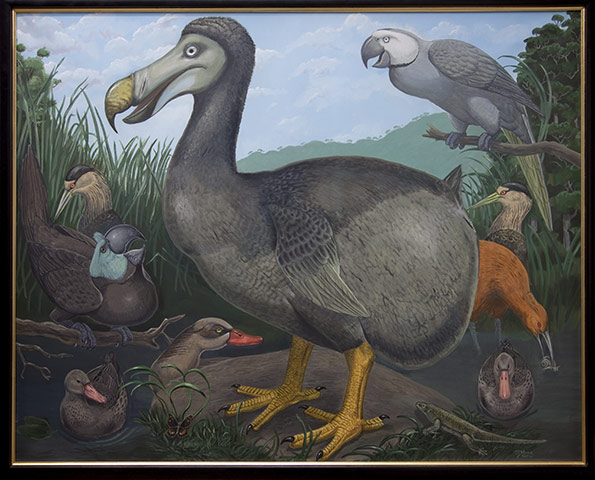
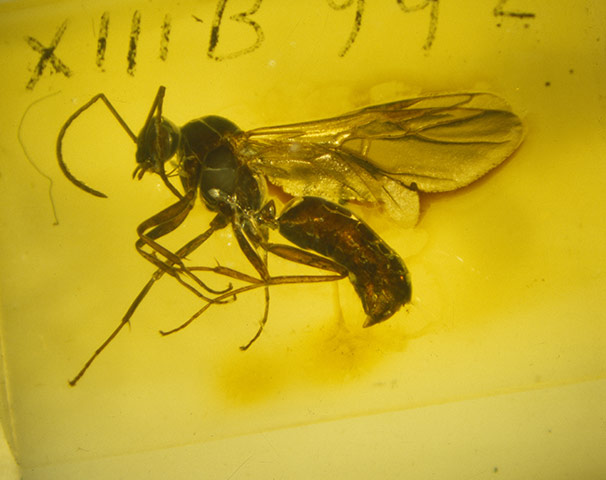
The famous oil painting of a dodo by 17th-century artist Roelandt SaveryPhotograph: NHMDodo raphus cucullatus by palaeontologist Julian Hume. The image was created by examining the skeletons of dodos, and depicts it having longer legs, a straighter neck, a less bulky body and a smaller head than in Roelandt Savery's paintingPhotograph: NHMA flying ant in Baltic amber Photograph: NHM
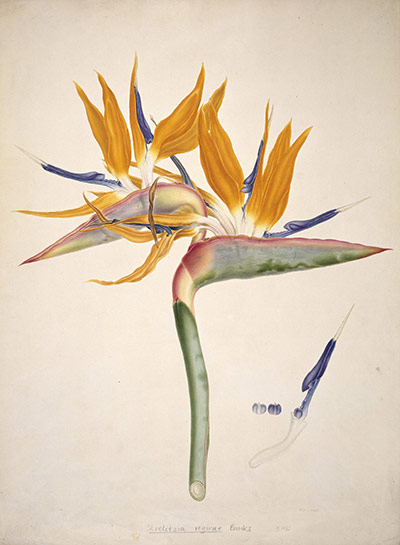
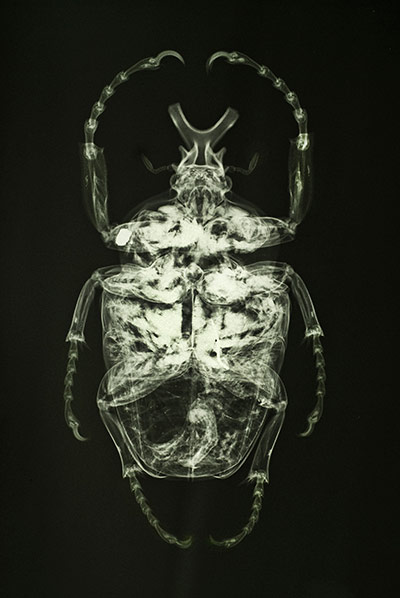
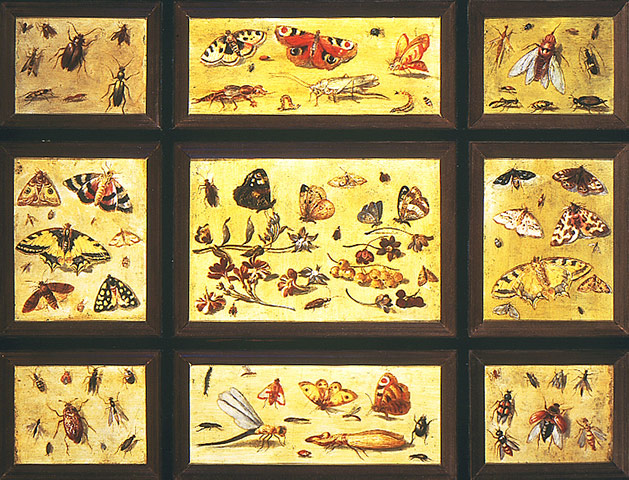
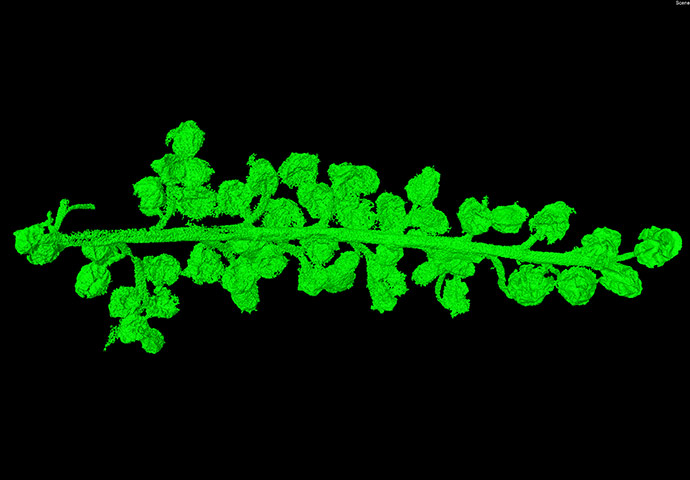
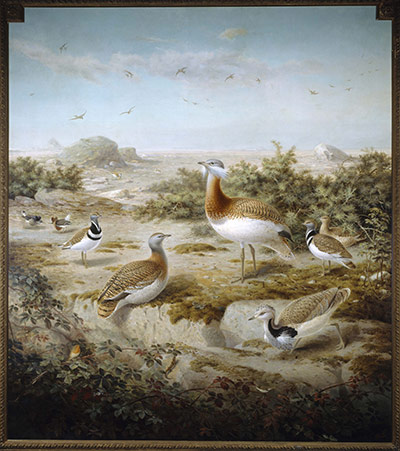
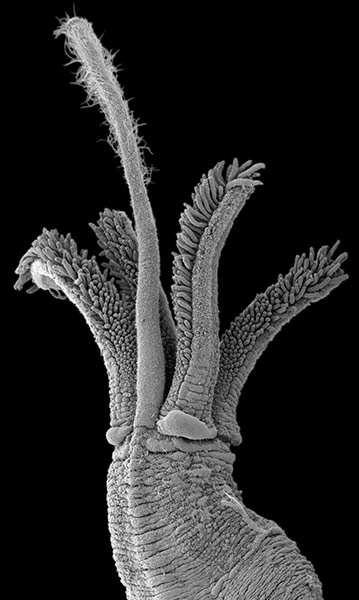
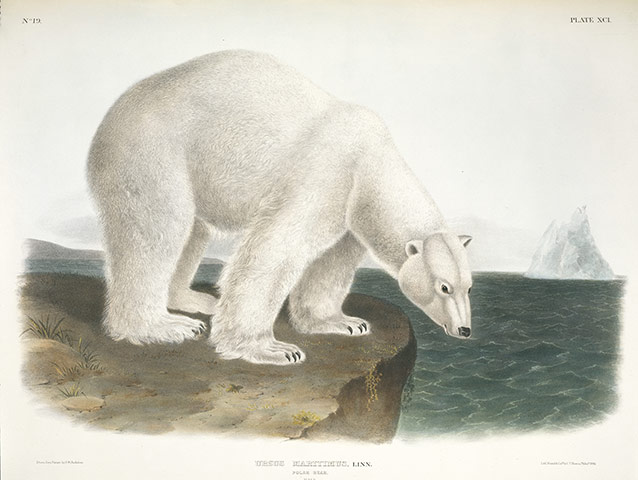
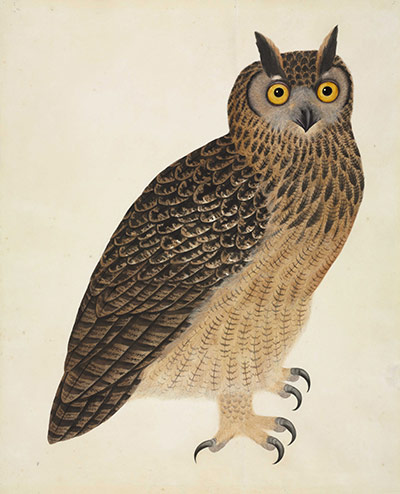
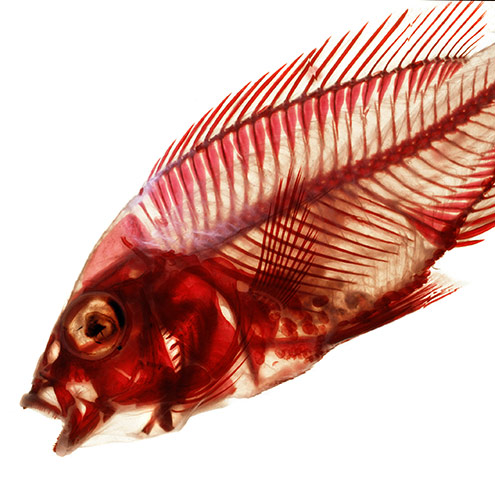
Watercolour of a bird of paradise flower (Strelitzia) by Franz Bauer, 1818 Photograph: NHMA goliath beetle (Goliathus goliatus), one of the largest insects in the world, which can reach more than 11cm (4.5 inches) in length. The x-ray revealed the presence of a single shotgun pellet inside the body Photograph: NHMEuropean insects attributed to Van KesselPhotograph: NHMMicro-CT scan reconstruction of a pollen-bearing leaf from a 310-million-year-old seed fern (Crossotheca hoeninghausi), which was preserved inside sedimentary rock. The scan reveals the external shape and structure of the leaf, including clusters of pollen-containing sacsPhotograph: NHMGreat Bustards, Little Bustards by John Gerrard Keulemans. The canvas is huge, covering the full height of the gallery wallPhotograph: NHMElectron micrograph of Osedax mucofloris – which means bone-eating snot-flower – a new species of marine worm discovered in 2004Photograph: NHMPolar bear (Ursus maritimus) by John Woodhouse AudubonPhotograph: NHMThe Eurasian eagle-owl (Bubo bubo bengalensis), artist unknown, watercolour, 1812 - 1831Photograph: NHMA stained cichlid skeletonPhotograph: NHM
Sign up to read this article
Read news from 100’s of titles, curated specifically for you.