“As at December 1988, Dr Scott Johnson was twenty-seven years of age. He was a citizen of the United States of America. He had everything to live for.” That’s where the head of New South Wales’s higher criminal courts began last week’s judgement concerning a death that has haunted Johnson’s family, the state’s police and Australia’s media for decades.
Here is how chief judge Robert Beech-Jones finished: “I doubt that the imposition of sentence on the offender for the second and hopefully last time will bring closure in respect of the terrible events surrounding his death and their aftermath. However, it is be hoped that it at least represents progress towards that end.”
How could a man’s punishment for “terrible events,” albeit thirty-five years late, not bring closure? Why is even “progress towards that end” a mere “hope”? And, given that the offender had pled guilty, why is this only “hopefully” the last time he would be sentenced?
The judge’s doubt may be a case of déjà vu. This sequence of events — a guilty plea and a sentence — has happened before in this case. Indeed, Beech-Jones is the fifth judge to make a finding about Johnson’s death. Every finding has been different, and none of the previous four stood the test of time.
Will the fifth? I’m not sure what I hope will happen.
“The procedural history of this case is a story in its own right,” Chief Judge Beech-Jones observed. It began on 10 December 1988 when a thirteen-year-old spear fisher spied a body lying on rocks under Blue Fish Point on the ocean side of Sydney’s North Head. Scott Johnson was naked, but the police soon found his clothes, neatly folded, near the clifftop. When an autopsy confirmed that the American had fallen from height a day or two earlier, the police and a coroner quickly concluded that he intentionally jumped. Last week, though, Beech-Jones said this “appears to be an absurd suggestion.”
The first finding about Johnson’s death was based at least partly on absurdity. His coroner cited the fact that he was “an extremely brilliant mathematician who was reserved and introverted” as a risk factor. But Johnson’s long-term partner also assumed that he had jumped. Four years earlier, Johnson had phoned to tell him that fear of exposure to AIDS had driven him to San Francisco’s Golden Gate Bridge. “But when he got there, he found that his muscles froze over.”
The suicide finding lasted twenty-three years, a period in which a different coroner found that three men who died or disappeared on Sydney cliffs in the late 1980s may have been the victims of gangs targeting gay beats. In 2012, a second inquest into Johnson’s death heard that Blue Fish Point was also a beat. The second coroner found that the cause of Johnson’s fall couldn’t be determined and recommended a fresh police investigation.
This open finding lasted just over five years, until a third inquest reviewed the police’s discoveries. The third coroner was told of the “Narrabeen skinheads” who targeted various gay beats in Sydney’s north in the mid 1980s. One informant testified that a pair from the gang had boasted that they once “bashed an American faggot” in Manly who then “ran away.” A “community source” explained that other gang members sometimes targeted beats at North Head in the late 1980s. But the third coroner dismissed these new clues as too slight and unreliable to cast any light on Johnson’s death.
That coroner nevertheless thought other evidence revealed what happened on 8 December 1988. A “psychological autopsy” of Johnson (who had recently made major progress on his doctorate, which was awarded posthumously) made the initial suicide theory “very unlikely.” Evidence from Johnson’s brother Steve of the pair’s many hikes made an accidental fall equally unlikely. And the American’s seemingly missing wallet suggested the malign involvement of a stranger. This became the first judge to find that a crime had occurred: “I readily conclude that homicide is more likely than either of the other scenarios.”
But he also sorrowfully rejected Steve Johnson’s request for a fresh investigation independent of the police. The initial poor policing and passage of time left little hope, he said, of finding the culprits. (He thought it “likely” that the student, who was “strong and young and fit,” had been attacked by two or more people.) Nevertheless, citing harrowing accounts from past beat users of recurrent violence at Blue Fish Point, he found that “Scott died as a result of a gay hate attack.” That finding lasted less than five years.
“I did have a dream about, ’bout him… a couple of nights ago, I don’t know, it was just a weird dream in the bush, something to do with the bush… I was with him up the, up at North Head.”
“Was the gay the kid who died?” someone asked.
“Yeah,” said Scott White. It was 19 March 2020 and White was talking to “two witnesses.”
Scott Johnson and Scott White shared more than a first name. They were both the middle of five siblings. They each grew up in grim circumstances with a single parent. Both were gay. Each had thoughts of suicide. But that’s where the similarities ended. White had little to live for and no chance at all of getting a doctorate or a soul mate. He was drinking by the age of thirteen, homeless by fifteen, and in and out of fights, boys’ homes and prisons into his twenties. He was eighteen when Johnson died, married at twenty-three, and thirty-eight when his wife left with their six kids. He then cared for his alcoholic mother until she died in 2018. In March 2020 he was living alone and friendless.
Who were the “two witnesses” White was revealed to have spoken with just as Sydney locked down? Nearly every court that described their chats studiously avoided saying, but one let it slip: they were “undercover police operatives.”
“See back in them days gay wasn’t like it is now,” one cop said.
“Like we used to go poofter bashing,” White replied, before adding, “Yeah, my brother did.” His brother was why he never came out.
“Ah well you need never tell him, mate,” the cop soothed.
The cops drove White to Blue Fish Point and must have been disappointed when he walked a lengthy bush trail towards Manly and identified the Upper Shelley Headland lookout as the spot where the man with “a bit of an American accent” and a “good build” had undressed in his “dream.” Becoming emotional, he said the pair had walked there from a local hotel and talked for hours. Pressed for details, White couldn’t recall if they were “intimate.” But then he remembered something: “I think we had a fight. That’s all I can remember… he fell. I took off.” White was arrested two months after he uttered those words.
All this seemingly followed a single police interview a year earlier, in which White denied attacking any gay men, let alone Johnson, and two home visits from the operatives the previous week. Just before those visits, the police obtained a warrant to make covert recordings and asked Steve Johnson to generate interest by pledging to personally double the police’s reward. But no one has revealed what the cops did to prompt a fifty-year-old loner to confide “his biggest secret” — that he’d known he was gay since he was fifteen — much less detail that week’s “dream.”
Some overseas courts frown on the use of stings to prompt admissions from vulnerable people. In 1993, an English trial judge threw out admissions that an undercover officer had extracted after answering a suspect’s “lonely hearts” ad and insisting on a murder confession as a condition for a relationship. The public pilloried the judge, but he was later vindicated when an unrelated man was convicted of the killing.
In Canada, the police have long cracked cold cases by posing as criminal gangs who insist on true confessions from their “recruits.” But the nation’s Supreme Court drew the line at undercover cops offering illusory friendships to mentally challenged, socially isolated men in exchange for unverifiable confessions. In 2014, it acquitted a man whose new “best friend” had taken him to the lake where his children drowned so he could demonstrate how he pushed them off a wharf.
Not so in Australia. When Australian police adopted their Canadian counterparts’ methods they were swiftly endorsed by the High Court and by parliaments, who exempted undercover stings from the rules that require police seeking admissions to use methods conducive to their reliability. In 2007, chief justice Murray Gleeson and his fellow judge Dyson Heydon upheld the use of a teen’s admissions to police who assured him they were speaking off the record, infamously observing that “every day police officers take advantage of the ignorance or stupidity of persons whom they eventually prosecute.”
White told his arresting officers he had been “full of shit” and just wanted to “get these guys” — the undercover cops — “off me back.” He spent the pandemic in prison being assessed by a succession of psychiatrists, who declared him fit to be tried but differed on their diagnoses. They all agreed that his childhood and heavy alcohol use had left him with cognitive defects. Ahead of a trial planned for the second anniversary of his arrest, the court set aside a week to resolve whether his jury could be told of his “dream.” That finding never came.
“How are you Scott?” his lawyer asked. “Terrible,” White told her. He’d been up since 4am, hadn’t eaten, and had lost his glasses. It was 9.40am on the first day of the pre-trial hearing in January 2022, and his lawyers warned him that his sexuality would be publicly aired. White said he was fine with his brother dialling in, but he wanted to know “what is all this about something I said to Helen [his ex-wife]?” His lawyers’ explanation left him more confused, but they also told him that the week’s hearings were just for legal arguments. When they reminded him that he would be asked to make a plea that day, White confirmed that he would say “not guilty.”
Just after 11am, a court officer read out the charge that, in 1988 in Manly, White “did murder…” “Guilty,” White interrupted. The officer continued: “… Scott Johnson.” “Guilty,” White repeated. How did he plead? “Guilty,” he said a third time, while his barrister shot to her feet. White added a fourth while the judge asked what his barrister wanted. She wanted to talk to her client.
Twenty minutes later, she told the judge that White no longer maintained his guilty plea. The judge could have simply re-arraigned White then and there. Instead, noting that his plea had been “loud” and “clear,” and that he obviously didn’t misspeak, she declared him guilty of murder. That finding, the fourth about Johnson’s death, was to last for just over a year.
Two days later, the judge rejected White’s formal request to withdraw his plea. White’s lawyers, who had planned to spend the week arguing that their client’s “dream” was the product of suggestion by undercover agents he was trying to please, were now openly accused by White’s prosecutor of “persuading” him to reverse his guilty plea. The judge duly dismissed the 9.40am conversation as White hiding his real intentions from his lawyers, and read the notes of the hasty post-plea conferral as his lawyers “cajoling” him into telling them “I didn’t do it, but I’m saying I did it.”
As for his reasons recorded in those notes — he told his lawyers he was scared of his ex-wife, he was safer in prison, he’d “take” ten years imprisonment, he wanted “it to be put to rest, for Scott, for the brother” — those were all consistent with his remorse for murdering Johnson as a teen. Moreover, the lawyers’ notes revealed that a change of plea had come up on four earlier occasions. The result was that White’s murder plea stood and so did the “dream” of the killing he had relayed two years earlier.
The only additional evidence the prosecution offered at his sentencing in May last year was from his ex-wife. Helen White revealed that she was the one who sparked the whole investigation by writing anonymously to the police after she saw a documentary on Johnson’s death. She recalled her then husband admitting that he used to “bash poofters” and said that, years ago, she had twice showed him Johnson’s picture from the newspaper, prompting him to say “that girly looking poofter” and “the only good poofter is a dead poofter.” Asked “So you threw him off the cliff?” he replied that it wasn’t his fault if “the dumb cunt ran off the cliff.”
The judge rebuffed White’s lawyers’ argument that no one could find the newspaper articles his ex-wife mentioned, as well as their suggestion that she had implicated her husband vindictively or for the $1 million reward. But, faced with the entirely different “dream” White had described to the undercover operatives, the judge baulked at confirming the third coroner’s finding that Johnson was the victim of a “gay hate attack.”
“There is no logical or rational reason,” she said, “to accept what the offender said about striking Dr Johnson, but reject what he said about going with him to North Head, without any apparent rancour, possibly for a sexual encounter to take place.” All that was certain, she said, was that White knew that hitting Johnson near a clifftop would probably kill him. That finding would last less than a year.
The murder finding unravelled bit by bit. Three appeal judges held that the judge should have been more open to White’s withdrawing a plea just twenty minutes after it was made. Indeed, they observed, White simply couldn’t have known the difference between murder and manslaughter. He hadn’t been advised by his lawyers on that, and even his prosecutor was yet to explain why White’s crime was the former. The judges sent the plea to be sorted out by chief judge Robert Beech-Jones.
White’s prosecutor tried to keep White to his murder plea, and even lodged a High Court challenge to the appeal decision. But he also agreed to discuss a compromise with White’s lawyers. Three months later, he simultaneously dropped his High Court challenge, his opposition to withdrawing the murder plea, and the murder charge itself. In return, White pled guilty to Johnson’s manslaughter.
It was all over bar White’s (second) sentencing, which proceeded on different evidence from the first. The parties’ “agreed facts” now covered only events in 1988 and from 2019, skipping White’s ex-wife altogether. But they included a new development: while he was still a convicted murderer, White was recorded on a prison phone call to a “relative” admitting “to hitting Dr Johnson at the cliff in terms consistent with what has already been recounted.” Like so much else in this case, no details are provided about what exactly was said in this call.
The chief judge rejected the only additional details White’s previous “dream” had revealed about his encounter with Johnson — “I hit him. He hit me. He stumbled back. I went to grab him and he… just stumbled back” — but also put to rest his predecessor’s finding that White knew his punch would likely cause a fatal fall. This time, no one argued that Johnson died of a gay hate attack.
And so, Beech-Jones set out the fifth, and current, official account of Scott Johnson’s death: “The end result is that not much is known about the killing of Dr Johnson beyond a punch near a cliff, a vulnerable victim, a fall over the cliff, a death, an absence of taking even the simplest step to render help after the fall and decades of pain and grief that followed.”
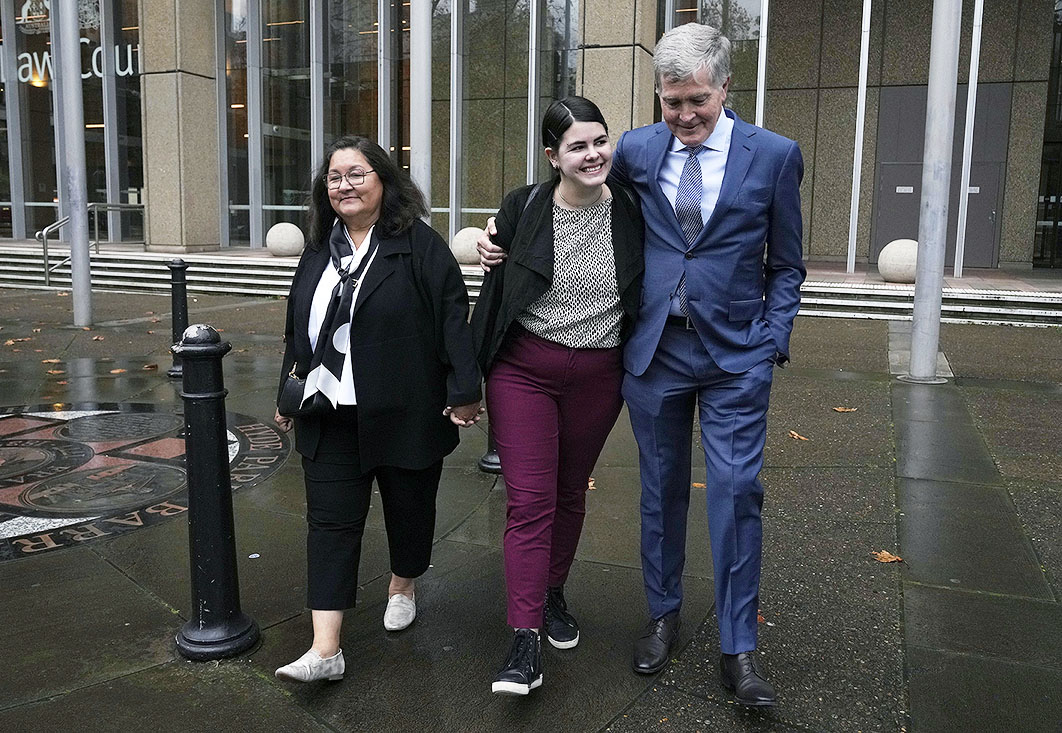
Is this closure for Scott Johnson and his loved ones? Five years ago, and nearly thirty years too late, a coroner put an official name to why Scott Johnson died (“a gay hate attack”) but couldn’t name his killer. Last week, a chief judge put an official name to the killer (“Scott”) but couldn’t say why he killed. “I think our family has got some peace and I would even say closure,” Steve Johnson said on the court’s doorstep. “We’re one of the lucky families.” No one can or should second-guess him. (A special commission will report on the police’s handling of hate crimes, including Johnson’s case, in coming months.)
Is this closure for Scott White too? He has now “specifically confirmed to the Court that he accepted legal responsibility for the death of Dr Johnson but not for murdering him,” and been sentenced accordingly. Beech-Jones found that the eighteen-year-old White “was clearly a damaged, albeit physically powerful, young man. However, he was not broken as he is now.” How much more should the courts break him at age fifty-two? Beech-Jones settled on a minimum of three more years in prison, and neither he nor White should be second-guessed either.
But should the rest of us accept closure in this case? Doing so is certainly in vogue. Even the Scots, who famously allow their criminal juries the option of a third, “not proven,” verdict, are contemplating a switch to the binary of guilty or not, lest they be too tempted (perhaps like Johnson’s second coroner) to throw up their hands in difficult cases and let villains go scot-free. But closure is seemingly what motivated the initial police and coroner (who were too quick to conclude that Johnson jumped), the third coroner (who was too sure he was chased), and the prosecutor and first judge (who were too determined to find that he was pushed).
Beech-Jones, the most careful of the case’s five judges, had the luxury of being bound by a manslaughter plea, and found nothing more than that. But the rest of us aren’t required to accept White at his word and should hesitate to do so. He has said that he is many other things — a “poofter basher,” a dreamer, “full of shit,” a murderer — and he may be all of those, or none. What everyone agrees is that he says whatever pleases whomever he’s near, be that his brother, his wife, complete strangers or his own lawyers. And nothing White has said about Johnson’s case went beyond what everyone around him knew or assumed had happened.
The case gives me déjà vu. White’s dream reminds me of Andrew Mallard, whose supposed murder confession to the Western Australian police consisted of what he said was “my version, my conjecture” of what the murderer would have done, described in the third person. It turned out that he was just parroting what the police had told him, including their own (wrong) assumptions about how the crime happened. A fingerprint identified the true killer, but only after Mallard spent twelve years in jail.
White’s guilty plea reminds me of George Heron, whose confession to killing a seven-year-old after days of oppressive questioning was thrown out of court decades ago, to the anger of the girl’s mother, the police and the British public. Heron was sued, hounded, outed and even stabbed, but that wasn’t the worst of it. “There were times I wondered if I had killed Nikki. So many people said I had that I started to doubt myself.” Her real killer was convicted last month.
Like Johnson’s third coroner, I’m pessimistic now — given poor policing, official tunnel vision and the passage of time — that we’ll ever learn more about Scott Johnson’s death. But the real, repeated lesson of these events is that this sort of case is never truly closed. Maybe there’s more evidence implicating White in the events of December 1988 than just his inconstant, vague, derivative say-so, and for some reason we just haven’t been told. I truly hope there is. But, if not, then I’m not willing to merely hope that this is fifth time lucky. •
Postscript (March 2026): Outside Story
By the time I wrote this essay for Inside Story, Scott Johnson’s death had been the subject of five conflicting court judgements over thirty-five years. It turns out that, as I was writing, a sixth judge was considering weighing in.
Police appearing before a special inquiry into “unsolved” gay hate crimes had seized on the case’s fifth judgement — Scott White’s conviction for Johnson’s manslaughter — to argue that the inquiry could no longer examine Johnson’s case. In response, the inquiry’s barrister pressed Supreme Court justice John Sackar to declare the case “appropriately” but not “sufficiently” solved.
Pretty much everyone would agree with the barrister’s position. There is no doubt that White’s plea of guilty to manslaughter (unlike his earlier one to murder) was informed by careful legal advice, making his manslaughter conviction “appropriate.” At the same time, no one could be happy with the strained story the prosecution and defence agreed on to explain that verdict: that Johnson’s death came about when the pair’s consensual cliff-top walk ended in an unexplained punch.
As my article recounts, however, any consensus on this point encompasses two very different scenarios. The first is that White was a much greater villain than his sentence credited, killing Johnson as part of a pattern of homophobic violence across Manly and elsewhere. The other is that he is a victim of a miscarriage of justice, wrongly connected to Johnson’s death as a part of a pattern of police tunnel vision across the history of this case and many others.
After a month of mulling, Justice Sackar decided not to decide whether the case was solved or unsolved, instead ruling that he could examine the police’s previous handling of the case regardless. His subsequent report on the investigation was one of several deep dives into the case’s past that have been published since my previous article.
The first was an October 2023 (American) ABC docuseries that expanded the story previously told by the (Australian) ABC’s Australian Story about the decades-long efforts by Scott Johnson’s brother Steve to have the case reopened. The four parts of Never Let Him Go track each of the case’s first four judgements and add to the public record a wealth of moving home videos, TV broadcasts, police footage and new interviews. The documentary lays bare some of the costs Steve Johnson’s quest had for himself, his family and, less directly, various passing suspects and officials whose alleged crimes or missteps became fodder to advance the multimillionaire’s campaign.
One such figure was Pamela Young, who ran the police’s investigation between the second and third Johnson judgements. She was a focus of Sackar’s public report, published in December 2023, which delved into the police’s internal scramble to respond to Steve Johnson’s campaign. Sackar found that a text message Young (who favoured the suicide theory) had sent to her boss — “I won’t let them win – it’s not in my DNA” — proved that her investigation was affected by the same “institutional defensiveness” that had tainted other police investigations of alleged gay hate crimes. Viewers of Never Let Him Go, which includes an interview with Young, can judge for themselves.
The third publication since White’s conviction was Steve Johnson’s own book, released in mid-2024, which won an award for the year’s best Australian true crime book and is being developed as a movie. A Thousand Miles From Care is much more detailed and unguarded than the docuseries, and parts of it — especially its unkind takes on many people involved in the Johnson case — left me less sure about my earlier stance that “no one can or should second-guess” the multimillionaire.
The book includes a rare behind-the-scenes look at the plea-bargaining process that preceded the case’s fifth judgement. It reveals that the state Director of Public Prosecutions, Sally Dowling, labelled the quashing of White’s murder conviction (the case’s fourth judgement) by the state’s criminal appeal court “a ridiculous ruling” that she “can’t allow to stand” as “it will make it very difficult for anyone to plead guilty in the future.” But she did let it stand in the end, after Steve Johnson — keen to avoid more delays and a possible acquittal — told her his family “could accept the manslaughter plea.”
Last year saw the case’s latest development, a long-form article in the New Yorker. Eren Orbey (who I spoke with a few times when he was researching the piece) had written before about how homicides affect family members, including a man whose wife is presently on trial for murdering their children and Orbey’s own response to his father’s death in Turkey.
Orbey’s article includes the voices of two key figures who have said little in public before now. The first is Scott Johnson’s other surviving relative, his Australian partner Michael Noone, who improbably now lives in the same city as Johnson’s American brother. Noone revealed that he regrets telling Steve Johnson of the case’s possible link to Sydney’s gay hate crimes, which sparked the campaign to reopen the case.
The locus of Noone’s regret is the other key figure Orbey interviews. “I didn’t do it. I never met the guy in my life,” Scott White told Orbey and Noone when they visit him in Cessnock prison, voicing exactly what Noone fears. But White also bizarrely declared himself happy to be wrongly convicted, praising the relative comforts of his jail and how his guilty plea provided for his children, courtesy of his ex-wife’s share of the reward for helping to “solve” the case. Readers of the New Yorker article may see this as an instance of White’s seeming penchant for adopting others’ suggestions as his own.
A quality docuseries, a judicial report, an award-winning memoir and a prestige long-form article are clearly major contributions to the public record, but none have prompted any new discussion of the case. Sackar’s report was duly reported by the media, but his findings on the Johnson case understandably made no splash, given their narrow and unsurprising nature, the many other cases the inquiry addressed and the report’s timing (in late December.)
But that isn’t true of the docuseries and book, which each revealed new and startling details about the prosecution’s case against White. These include an interview with White’s ex-wife, who repeatedly alleges that he had often acted towards her and others in ways that matched what he’s alleged to have done to Johnson; Steve Johnson’s claim that his own privately funded investigation had long listed White and his brother as persons of interest; and Sally Dowling’s behind-the scenes fears that White could be acquitted if his murder charge went to trial. And yet the docuseries (which launched “with precisely zero promotion or fanfare on Disney+”) and Johnson’s book (which received the usual promotion) have prompted no discussion in Australia of the evidence against White.
All this might just reflect the case’s new status as a non-mystery, but the similar lack of attention to the New Yorker piece is not so easily explained. When the same magazine published a detailed article in May 2024 suggesting that the mid-2023 conviction of a British nurse for the murders and attempted murders of a dozen newborns may be a miscarriage of justice, it was the subject of articles and parliamentary questions in Britain complaining UK locals couldn’t legally read it ahead of the nurse’s retrial on one charge. By contrast, Orbey’s article, which likewise argues that White’s mid-2023 manslaughter conviction may be unsafe, has simply been ignored by Australia’s press, aside from one independent journal.
Unlike the New Yorker’s piece on neonatal nurse Lucy Letby (which mainly reprised the evidence in her widely reported trials), Orbey’s article includes a wealth of new evidence that has never been publicly aired, effectively publishing the entire prosecution case against White for the first time. The magazine’s investigation yielded a full transcript of White’s alleged confession to undercover police, a verbatim account of his supposed later confession to a relative, and previously unreported evidence of alleged further admissions to a fellow prisoner and a friend.
Orbey also sources new information that raises questions about the prosecution evidence, ranging from doubts about whether White led police to the real site of Johnson’s death to the police’s failure to “verify a single incident in White’s past” that matched his ex-wife’s claims about him, as well as confirmation that she, the prison informant and White’s friend all received portions of the police’s reward.
And yet, as near as I can tell, there is currently no Australian reporting about these revelations or any fresh investigations here about the evidence in the case. This may be due to the usual mundanities of journalism: overstretched reporters simply missing the new developments, judging them to be too niche or moving on to fresher stories on the hate-crime and true-crime beats. Or it may reflect a take of mine that the New Yorker quoted about the awkward politics of following up the Australian media’s decades-long coverage of “one miscarriage of justice” (the weak case that Johnson killed himself) with “another” (the weak case that White killed him.)
But there is a further explanation: White’s various guilty pleas meant that only a fraction of the prosecution evidence was ever aired in court, and then only in the form of brief, negotiated summaries. This means that journalists don’t have access to either a court file setting out the full evidence or the protections against defamation that apply to fair reports of court proceedings. Such limitations aren’t unique to the White case and are often overcome by dogged Australian reporters, but they make investigating and covering the evidence in his case a much more expensive exercise.
And there’s also a problem unique to the Johnson case, concerning the key evidence against White, his supposed confession to two undercover police. According to the New Yorker, Americans who watch Never Let Him Go on Hulu can hear Steve Johnson describe the ruse the cops used to get White to accompany them to North Head and allegedly describe Johnson’s death. Long-time follower of the case, Rick Feeney, reported on this reveal in the Sydney Morning Herald after the documentary launched in Australia, but his article has since vanished. Meanwhile, Australians watching the documentary on Disney+ are now shown a black screen during this section with the words “the police inform Steve Johnson about the events that led to the arrest.” In A Thousand Miles From Care, published the next year, he writes that he can’t describe the police’s trick due to “a court order against publishing “details” in Australia of the covert operation.” If that is so, it means that the central evidence against White can only be lawfully discussed in public outside Australia.
This is a familiar predicament for Australian journalists, who similarly couldn’t lawfully report on the trials of George Pell or some key evidence against Erin Patterson even though overseas media could. But the orders in those cases, designed to keep inadmissible evidence from Australian jurors, were temporary, expiring shortly after the relevant trials. The seeming publication ban in the Johnson case, by contrast, is ongoing, perhaps because its goal is to keep the Australian police’s undercover tactics from their future targets.
Decades ago, police sought to keep what was then a new ruse — tricking suspects into confessing their crimes to fake recruiters for fake crime gangs — from future dupes, but Victorian courts refused their request and the High Court’s Michael Kirby agreed with the media that “the public interest… in community discussion of the tactics used by police… would be inhibited by an unrestricted or long-term prohibition on publication.” New South Wales’s current judges seemingly see things differently, at least when it comes to undercover operations that prompted a guilty plea instead of a trial.
So, unlike Orbey (who “through a source associated with the case… obtained transcripts” of what the cops and White said during the operation), Australian journalists can’t report on either the fairness or the reliability of the police trick that ended the Johnson case. Australians who want to judge these matters can watch or read Steve Johnson’s takes (it was “a daring undercover operation right out of Mission: Impossible”), the police’s lead detective (“there were operational rules… and [White] wasn’t coerced at all”) and the state’s chief prosecutor during the plea bargain discussions (“the evidence could still be thrown out”).
They can also mull the reported views of an unnamed defence psychologist (the ruse put “unrelenting psychological pressure” on White) and one of his barristers (“I don’t think I’ve ever seen a case that’s ever disquieted me in the way this did.”) And they can lawfully read my take (after reading Orbey’s piece) that the police’s ruse carries all the dangers of their crime gang sting but lacks that trick’s chief virtue of giving targets a strong incentive to tell the truth. But they cannot read the details for themselves, at least not in an Australian publication.
That brings me to Inside Story, where I’ve written several dozen pieces over the years, mostly about ongoing or recent criminal cases. The New Yorker described my article on the Johnson case as “one exception” to how “almost no media has questioned the [case’s] outcome, in part because the evidence has been inaccessible.” But like every one of my pieces, “Scott’s Justice” was based entirely on published sources. I’m no insider. (Hence one error in my earlier piece, which assumed that White’s trial prosecutor, rather than his boss, called the later shots in his case. That’s an error no insider would have made.)
It’s easy to miss how rare Inside Story is in being willing to regularly publish criminal justice takes by a non-journalist. There are of course many Australian outlets that will quote quick expert analysis of criminal trials du jour, but not many that will give an expert a platform to discuss trials of the week, month or year. And there are very few that will publish long-form deep dives into the law or the fine details of its application. Very few, that is, outside of the cloistered world of academic publishing (which in 2024 included an article in a law review that criticised the sentencing law in White’s case). I come here to write here because I want to write engaging pieces like Orbey’s, despite lacking his journalist chops.
A final reveal from Eren Orbey provides a glimmer of hope that this won’t be the last Australian piece written on evidence in the Johnson case. Orbey’s New Yorker article reports there was a sixth judgement in the Johnson case after all, albeit one that is, fittingly for this case, both secret and disputed. Orbey somehow learnt what is inside the confidential final volume of Justice Sackar’s report, which contains “recommendations to law enforcement.” “Several sources” tell him that Sackar told the police “reëxamine” the Johnson case yet again.
While Sackar himself denied making a “formal recommendation,” he told Orbey “it’s highly likely you’ll find other lines of inquiry that have never been undertaken” even though “he had no doubts about the integrity of the conviction.” In other words, like everyone, Sackar thinks the case’s fifth judgement (White’s manslaughter conviction) resolved the case “appropriately” but not “sufficiently.” He explained to the New Yorker that “he suspected that White may not have acted alone,” even naming a potential partner in White’s crime.
Let me be judgy about Sakkar. The former judge, it seems, disbelieves every single word Scott White has ever said except the word “guilty.” He has “no doubt” about White’s guilt even though, like nearly everyone, “he hadn’t seen the undercover evidence,” which is the key evidence against him. Sakkar condemned police investigator Pamela Young for voicing her view to a coroner that Johnson likely suicided, but is untroubled (or perhaps unaware) of Steve Johnson’s repeated claim that Young’s successor as head of the investigation told him “your brother was murdered” at their very first meeting, a year before White emerged as a suspect. And he praises the offering of hefty monetary rewards in cold cases, even though such rewards tainted the credibility of every part of the prosecution case against White.
The Johnson case’s sixth judge, in short, exemplifies each of the cognitive dissonances that yielded the case’s current outcome. And yet, Sakkar’s recommendation — that the police should continue to investigate this case — is the right one, though the judge should perhaps be careful what he wishes for.
As I wrote nearly three years ago, “the real, repeated lesson of these events is that this sort of case is never truly closed.” With local journalists excluded from the beat and Scott White happy in his prison, a police investigation is now the only way to test the truth of all his words about Johnson’s death. Assuming that the police’s “institutional defensiveness” doesn’t apply to the case’s current strained outcome, new inquiries might yield fresh discoveries that either confirm or disprove the correctness of White’s manslaughter conviction and the integrity of the ruse that produced it. I truly hope they do. •
The post Scott’s justice appeared first on Inside Story.