
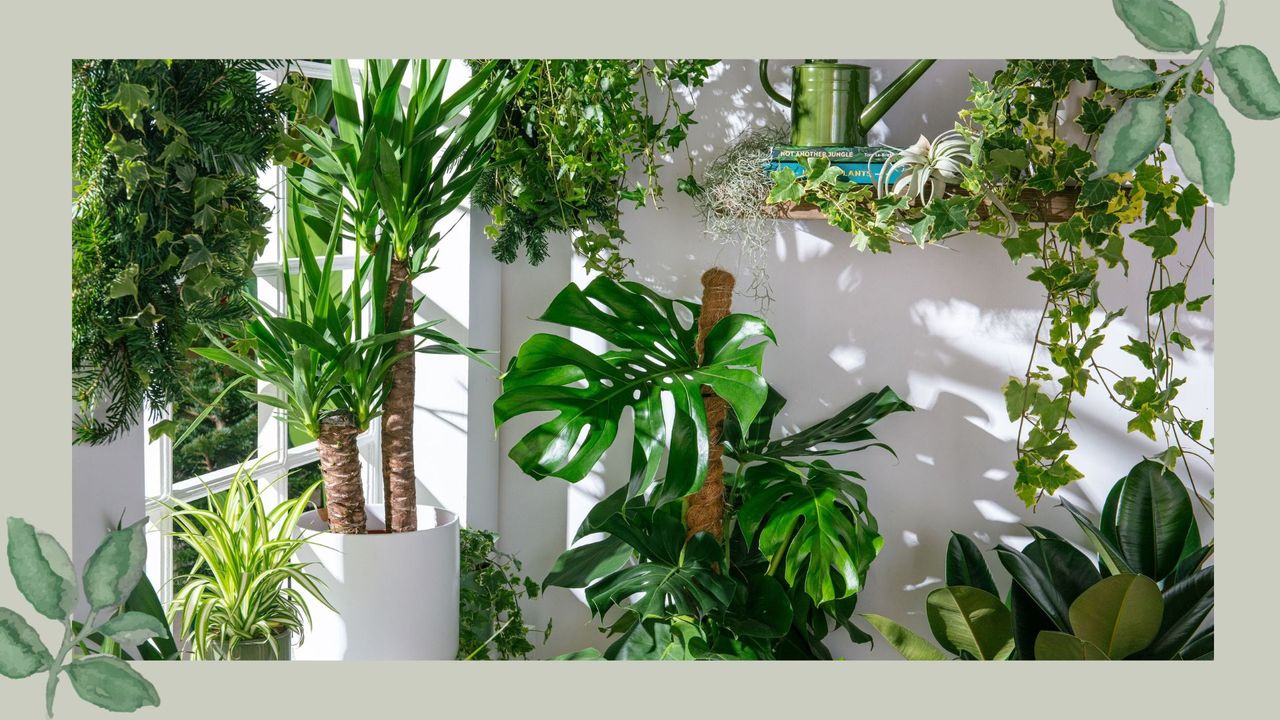
It doesn't take long for a Monstera plant to outgrow the space you originally placed it in – they can take over a whole room if left unaided. So how can you support this monstrous plant and keep it in check? We have consulted the experts for the best advice to aid its growing journey.
When caring for your monstera plant efficiently, you'll see multiple aerial roots and leaves quickly beginning to shoot out of its original stem. Monstera are one of the fastest-growing houseplants; you'll certainly not doubt that after owning one.
So how do you support a Monstera plant that grows large, wide leaves and even longer, thicker stems? That's the question we put to a team of plant experts, who have all the right advice to keep this lush houseplant in check.
How to support a Monstera plant as it grows: expert advice
As one of the easiest houseplants to look after, it's no real surprise that Monstera plants grow quickly and successfully with minimal intervention. However, just because your plant is thriving doesn't mean it doesn't need your care and attention.
"Monstera plants will become floppy as they grow, so you will need to tie the stems to some form of support, such as a coir cane or moss pole," says Graham Smith MCIHort, horticulture expert from LBS Horticulture.
He adds, "As Monstera are vining plants, they must be supported as they climb upwards. You can use a moss pole to support a monstera as it grows, as the aerial roots will be able to hold onto this."
Graham explains that moss poles are usually made up of sphagnum moss, this is so the roots to easily latch onto the surface of the moss and wrap around it. However, he does point out that if you opt for a moss pole, you'll need to ensure it's kept moist enough for the roots to attach themselves.
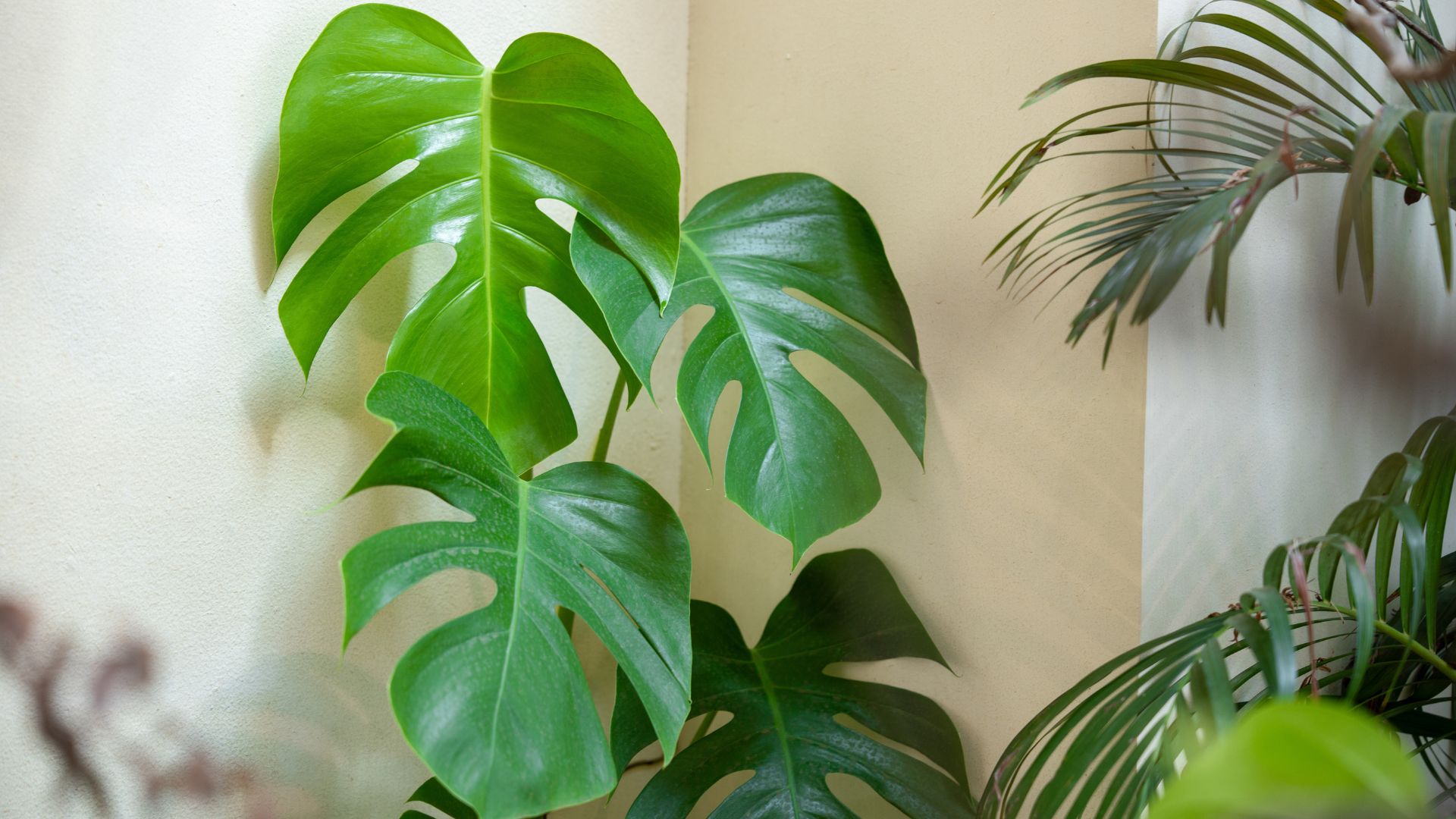
If you find yourself struggling to know how to care for your indoor plants as it is you might not want to add on the burden of caring for moss too.
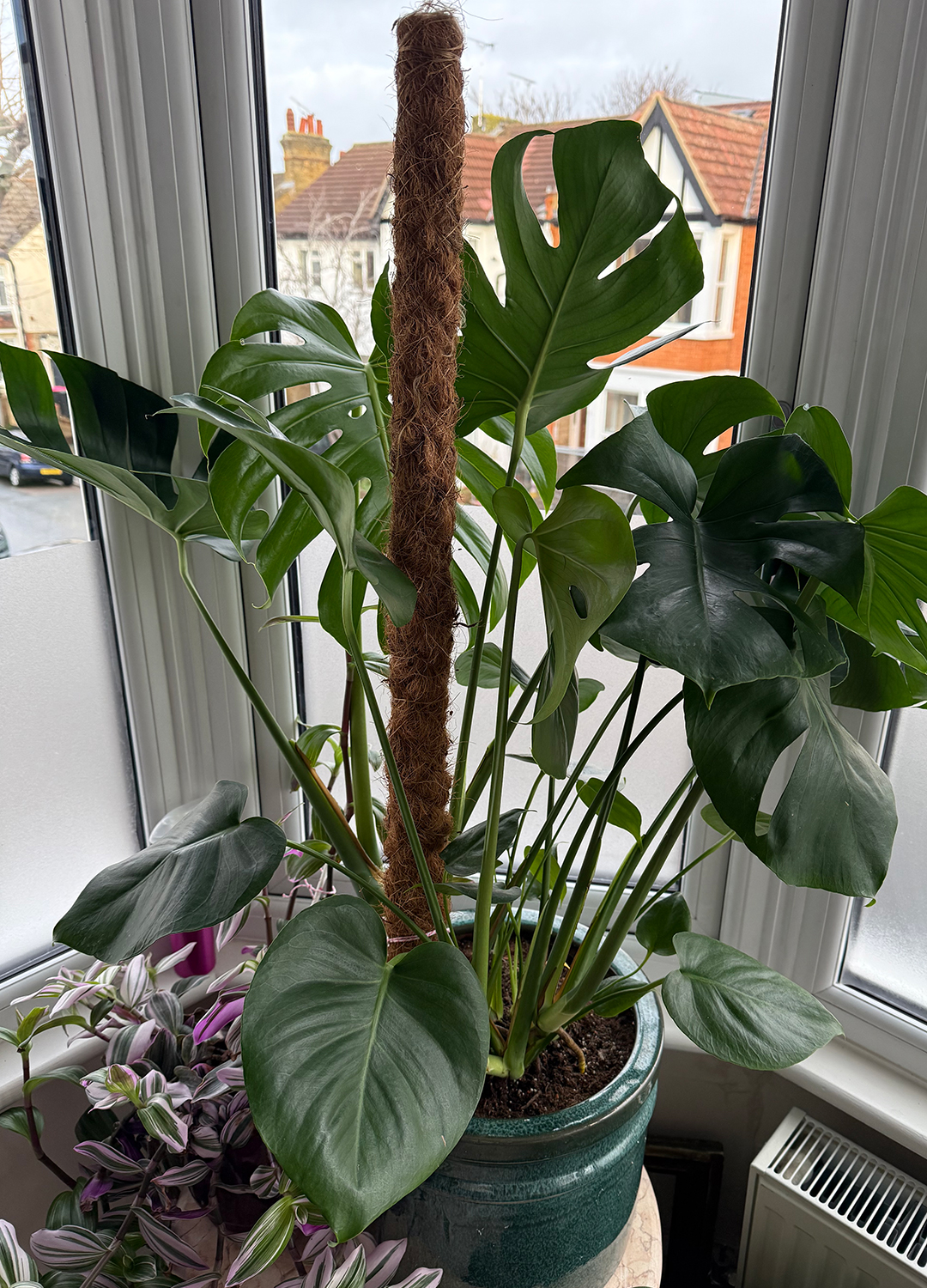
"Alternatively, you can use a coco coir pole to support growing Monstera plants. These are made from the outer husk of coconuts, and the material is absorbent so it can help to keep your plant moist," explains Graham.
You simply push the husk pole into your Monstera plant's potting mix until it's in place and then loosely tie the stems of the plant to the pole using gardening twine.
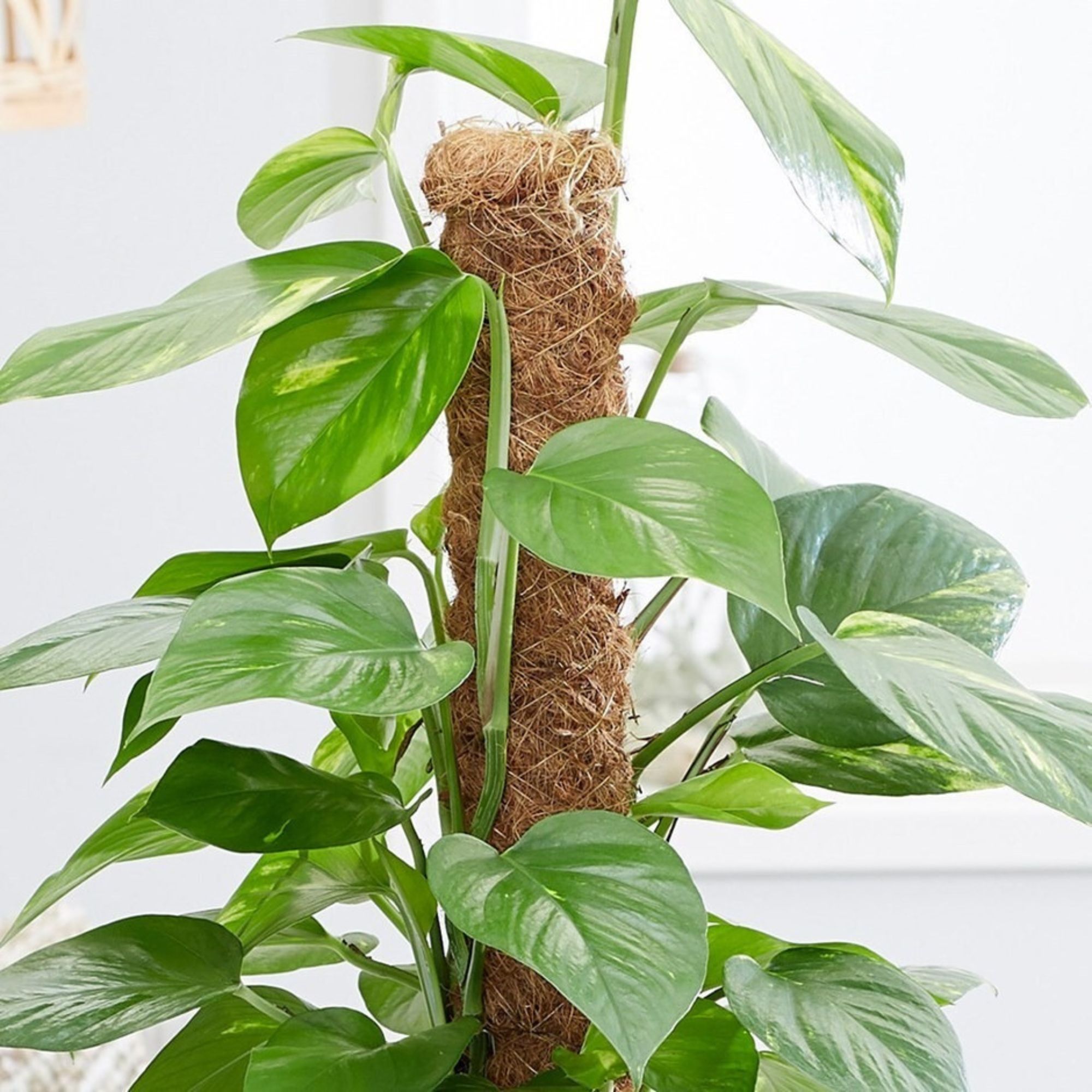
RRP: £14.99 | No matter what height your plant has reached there will be a husk pole to suit it, RHS alone offers four different sizes. They are made from natural coco fibre, which is wrapped around a sturdy plastic core. It also has a Chinese fir wood spike to help to insert it.
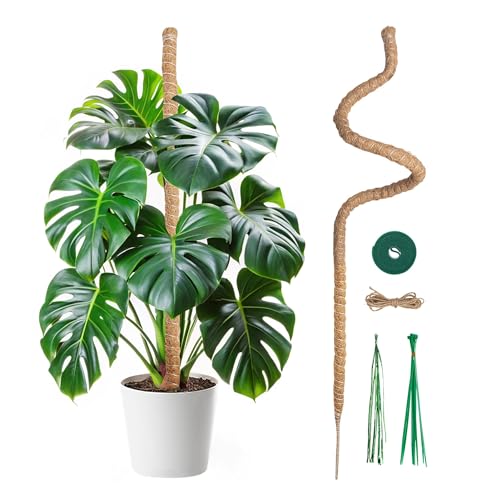
This 120cm/47inch bendable coir plant poles ensures total control over the direct of your climbing Monstera to offer maximum Support as it grows. It comes complete with cable ties and plant tape.
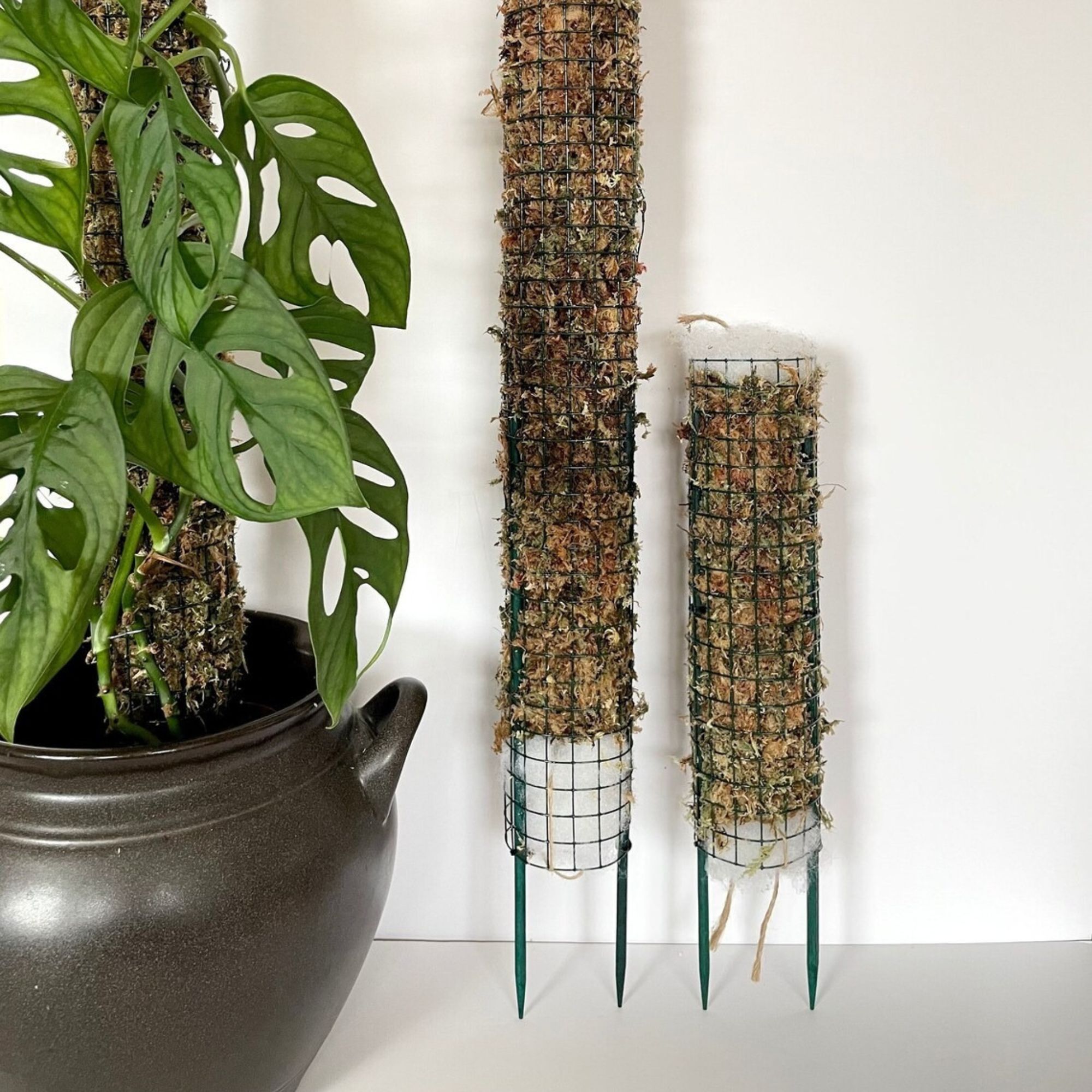
RRP: £16.99 | These handmade poles are designed to stack on top of one another making their height customisable to your plant's needs. The Etsy seller also provides a guide to ensure you order the right product for you and they come highly rated.
How do you stabilise a Monstera plant?
Although they're certainly not one of the hardest houseplants to keep alive, Monstera plants can become a little high-maintenance when they grow too large. After all, they're tropical plants and grow up to 20 metres in their natural habitat. So knowing how to stabilise your plant to stay in an upright position is key.
"Identify the areas around the bottom of the Monstera plant that need the most support," Graham advises. "These are usually the thicker, heavier stems. Use a trowel to dig small holes for the supports, and ensure that the support is inserted far enough into the soil so that it does not move around. If needed, you can push the support all the way down to the bottom of the pot."
After that, he recommends using twine or strips of fabric to tie the stems loosely to the support so they're secure. Graham warns against tying the stems too tightly, as this can damage them.
He adds, "Start by adding the ties roughly an inch or two above where the base of the plant meets the soil. The more support the plant has towards the base, the better it will be able to support itself as it grows upwards. Repeat and add ties every few inches or so to the stem of the monstera."
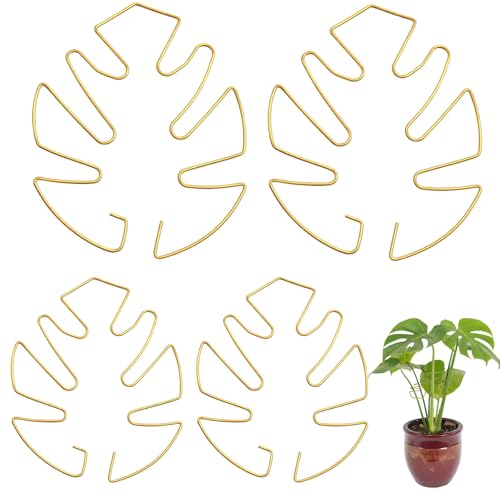
These attractive gold leaf-shaped clips are idea plant supports for Monstera plants as they grow. They are sturdy enough to provide support but wide enough to not feel too restrictive.
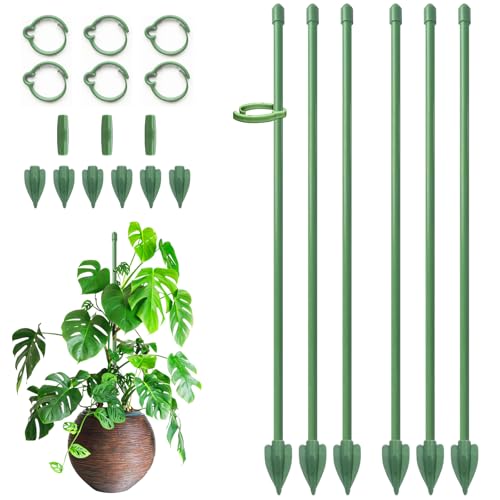
This set includes 6 x 30cm plant stake support sticks with clips to provide secure support for more established Monstera plants.
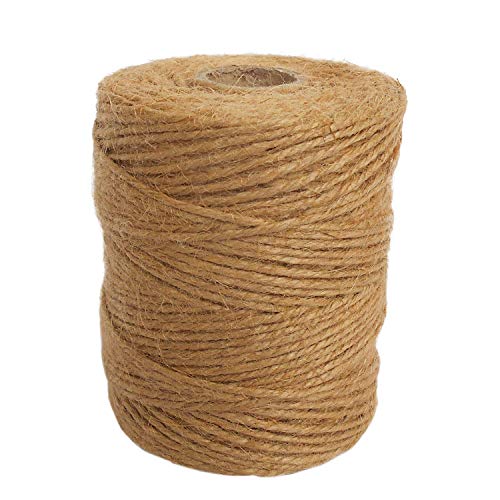
You can never go wrong with a roll of all-purpose garden twine. This heavy-duty jute comes compact on a roll with 101 metres. It's ideal for plant tying of any kind.
FAQs
How do you make your Monstera plant grow upright?
In your search for the best houseplant for your bedroom, you may have bitten off more than you could chew with a Monstera plant. And as you read this, you may be losing more floor space by the second, thanks to the way the plant tends to grow any way it wants. So if you want to enjoy the beauty of a plant but continue owning your home, you'll need to keep it straight from the start.
Rachel Cole, Seed Manager at Mr Fothergills explains, "If the plant is reasonably small, the moss pole is all you require and does not require any ties, if a larger plant and has not had a moss pole, once you have put the moss pole in the centre of the pot, without breaking the stems, so incredibly carefully, tie a few of the stems loosely with thick garden string. Hopefully, this will have all the leaves off the floor and the plant will find its own way to climb."
She says that because of the roughness of the moss pole, your plant will want to climb it as it grows; however, you'll need to buy a moss pole early on in the plant's life to ensure it grows straight.
Do Monstera plants need to be supported? And from when?
Although somewhat low maintenance, all the best indoor plants for your health and wellbeing will need some level of care from the second you buy them. So while Monstera plants are more than happy to grow rapidly on their terms, you should get in there early and guide them with support.
"You'll need to support them as early as possible, as they grow fast. Start with a small moss pole and then pot it on to a bigger pot and a longer moss pole. Remember to water/mist the plant and place it in a room with good sunlight, and then it will perform well," explains Rachel.
Graham also echoes this. He says that if you wait too long, your plant can grow too heavy to the point where a single support won't do much good.
Is a trellis or moss pole better for monstera?
Many of the best climbing plants love a trellis for support, but with Monstera branches being heavy, is a trellis any good for support? “As Monstera plants grow, they are best supported by a moss or coir pole to encourage stability," says Claire Bishop, Senior Plant Buyer at Dobbies
"Coir poles offer a lot of key benefits when used to support Monstera as opposed to a trellis, as the pole mimics a Monstera’s natural habitat. Monsterras come in lots of different varieties, but most either grow in bush form or climbing, and a moss or coir pole offers the best support."
She adds: "Arial roots are often confused as a sign that the plant needs to be re-potted, but these are just roots the plant kicks out to help stabilise it as it grows." Simply encourage these aerial roots to grow into the soil to offer more support.
Do monsteras prefer tall or wide pots?
Some plants need depth for the roots, others grow outwards – so which is better for a growing monstera? “If your Monstera has outgrown its current container, you might want to consider replanting in a wider pot," advises Claire Bishop.
"Pots with a wide base will accommodate the spreading of your Monstera’s roots and provide more stability for the plant’s top-heavy growth. However, you should be careful to only increase pot size by a couple of inches at a time to avoid excess moisture and waterlogging.”
Houseplants can aid us in many ways, some plants help with condensation and even species that NASA recommends for keeping our homes air clear. It's just a matter of knowing how to care properly for them so they can do their jobs for us.