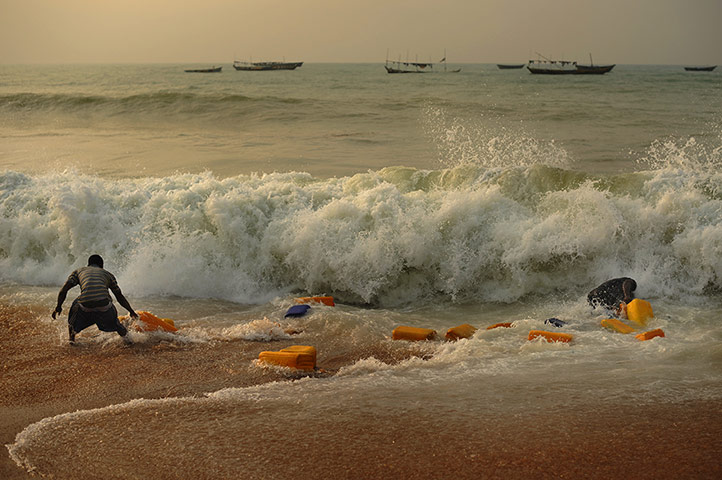
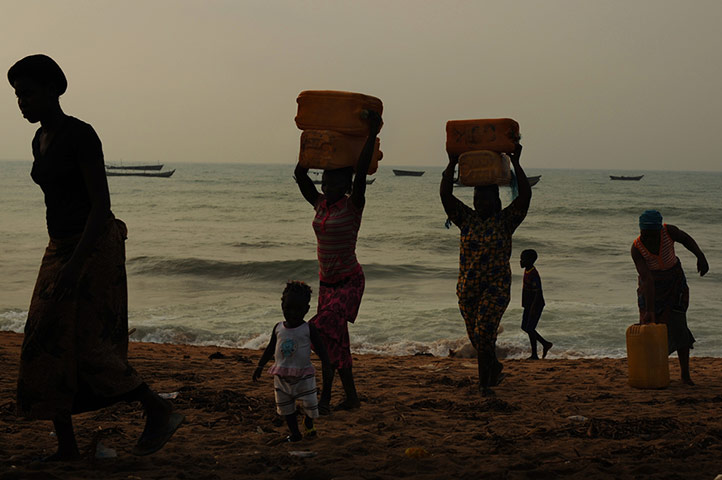
Jerrycans full of fuel are dragged from the waves at the border town of Aneho, Togo, after being towed there by swimmers from Nigerian boats lying offshore. Legally bought in Nigeria, the fuel is loaded on to boats which sail daily to Togo under cover of night. The journey takes about 13 hoursPhotograph: Daniel HaydukJerrycans – including 240-litre barrels – are transported by men and boys from the beach after being delivered by boats anchored nearby in the Gulf of GuineaPhotograph: Daniel HaydukWomen, flanked by children, carry jerrycans filled with hundreds of barrels of petrol to a warehouse at Aneho, on the Togo-Benin border. Smugglers say each barrel is worth 150,000 West African francs (£183), a small fortune by Togo's standards. From this distribution point, the fuel is spread throughout Togo, Benin, Burkina Faso and MaliPhotograph: Daniel Hayduk
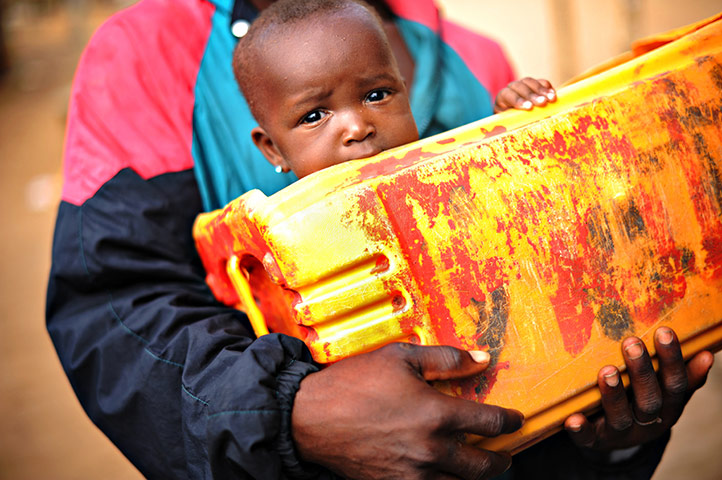
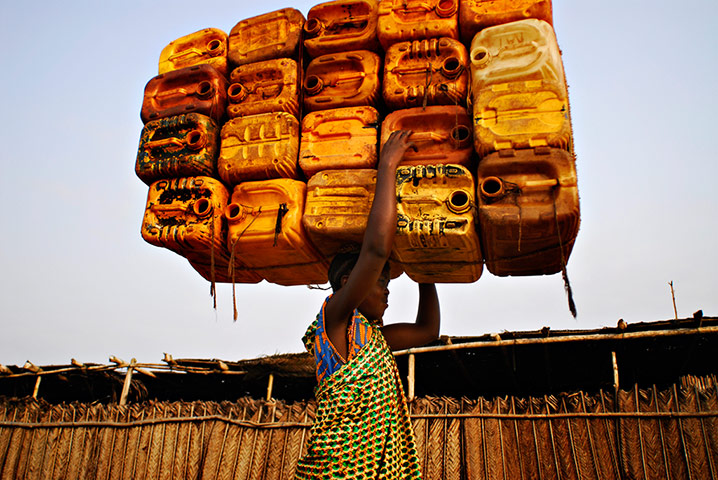
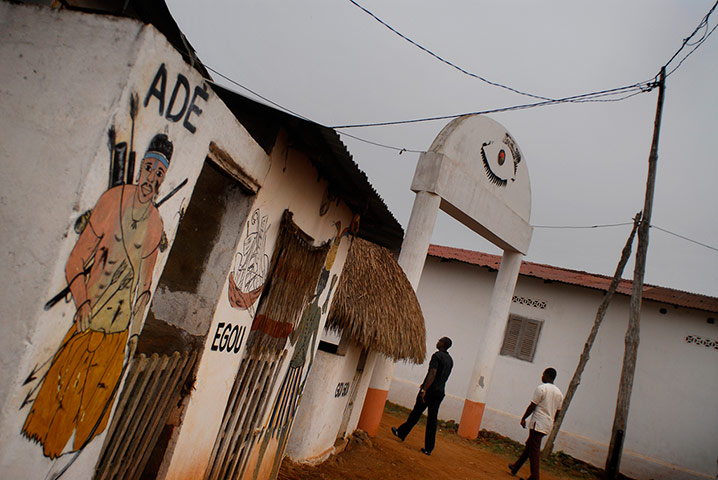
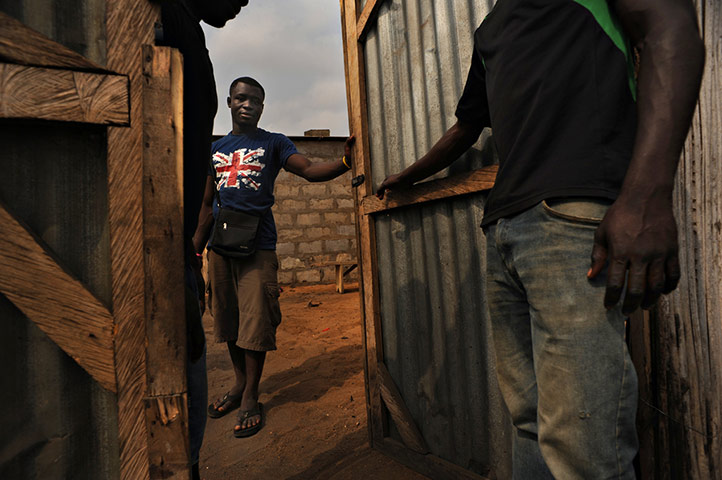
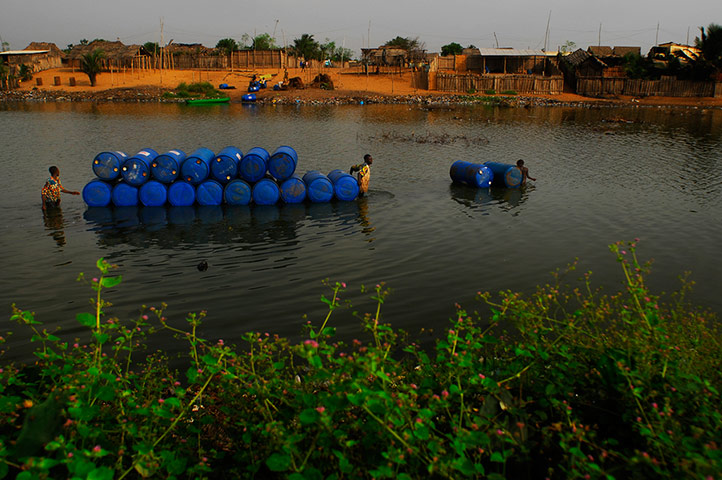
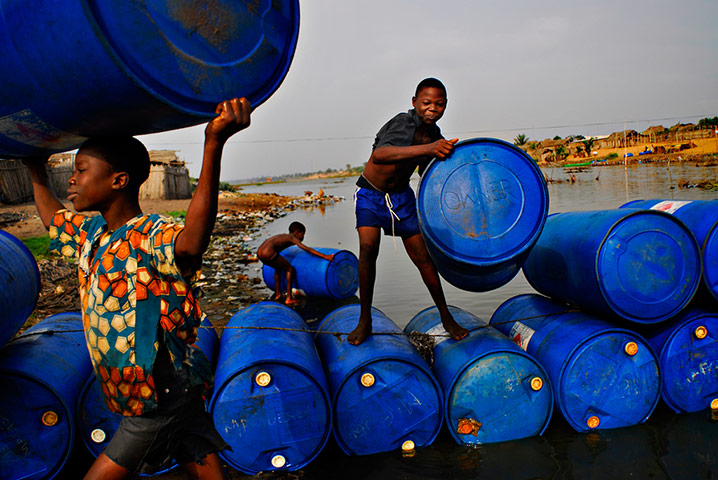
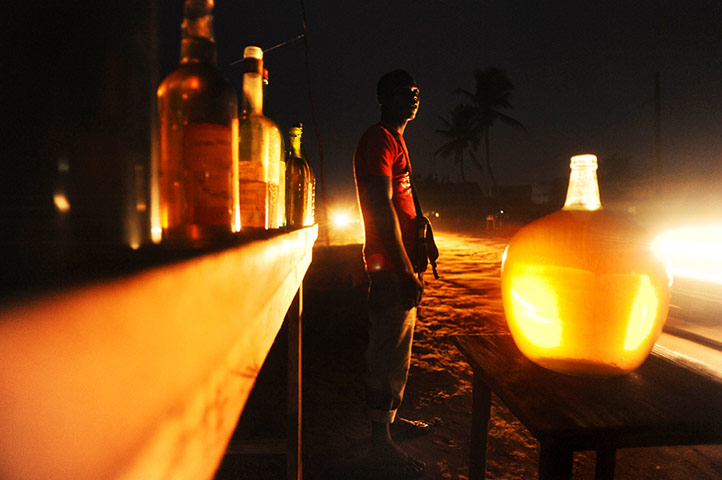
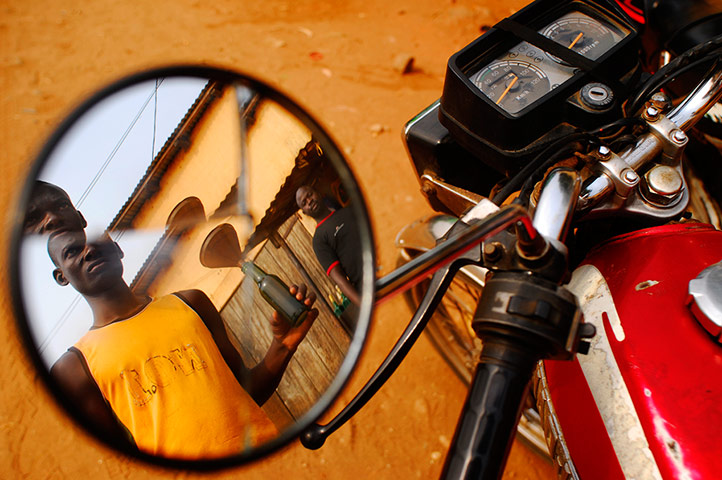
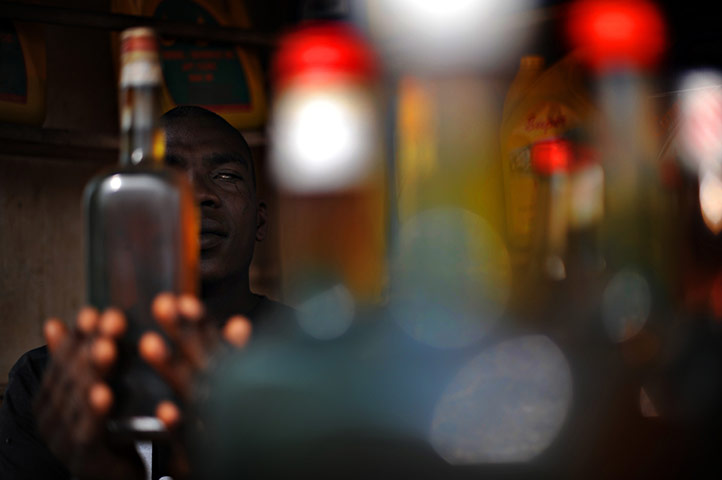
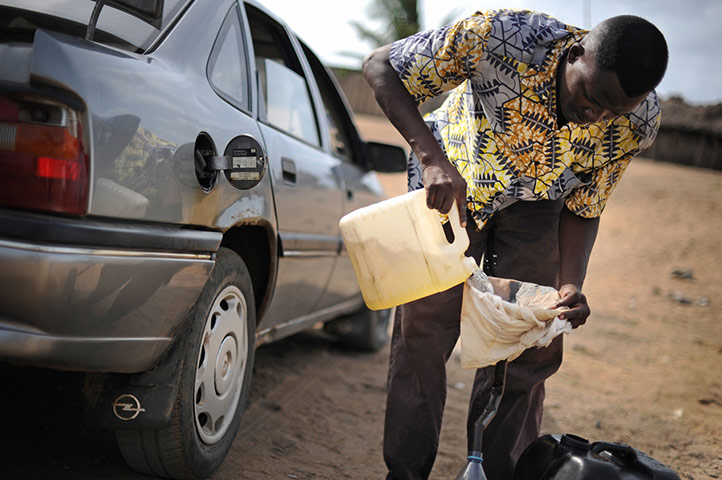
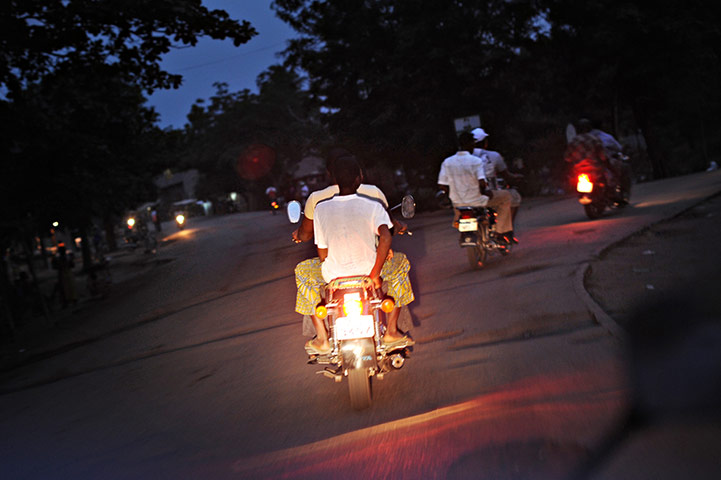
A six-month-old baby is cradled in a hollowed-out jerrycan. Many local families profit by taking part in the smuggling processPhotograph: Daniel HaydukA young woman carries a roped-up bundle of empty jerrycans into a warehouse Photograph: Daniel HaydukIllegal fuel sellers walk through a voodoo shrine in Glidji village, Togo. Smugglers are often seen locally as heroes as they provide jobs for the communities they operate inPhotograph: Daniel HaydukA metal fence surrounds the compound where illegal fuel sellers keep their stash in Lomé, Togo. Besides keeping out prying eyes, it wards off thieves and police, they sayPhotograph: Daniel HaydukBoys float empty barrels to a warehouse near the Togo-Benin border where tens of thousands of litres of illegal fuel are stored. A smuggler, who would not give his name, said the illegal fuel trade provides valuable jobs in a country where many people earn less than $1 a day. 'This continent is suffering too much,' he says. 'Fuel smuggling gives a job to a mother and allows her to send her son to school' Photograph: Daniel HaydukLarge, empty barrels are floated to the shore and stored ready for filling. The smuggling is a serious problem for governmentsPhotograph: Daniel HaydukA smuggler waits for customers in Aneho. A trademark of fuel sellers in Benin and eastern Togo is the distinctly shaped 20-litre glass bottle. Illegal traders often face police seizures, beatings and, in some cases, deathPhotograph: Daniel HaydukAn illegal fuel seller keeps his eyes open for authorities as he tops up a customer's motorcycle in LoméPhotograph: Daniel HaydukAn illegal fuel boss with bottles of fuel in Lomé where he operates two stalls. He's been in the business for 15 years, and says he does it because no other jobs are available. 'There is no money in the country,' he says Photograph: Daniel HaydukBack in Aneho, a motorist fills up a water bottle with smuggled fuel after filling his tank Photograph: Daniel HaydukMotorcycles are one of the most common forms of transport in Benin and Togo as they are cheap to buy and light on fuel consumption. Their operators often prefer to fill up with illegal fuel at roadside stalls, rather than use licensed filling stations where (in Togo) prices are 15-30% higher. Benin's government admits that more than 75% of the fuel consumed there is illegally imported from NigeriaPhotograph: Daniel Hayduk
Sign up to read this article
Read news from 100’s of titles, curated specifically for you.