“Is there someone trying to incite boozers?” asked journalist Brezh Malaba in a tongue-in-cheek tweet. Zimbabweans have largely obeyed restrictions on outside activity this week though 485 arrests were recorded on Thursday, day four of the curfew.
Homemade cider
On Friday, thirsty Zimbabweans took to swapping recipes on WhatsApp groups for maheu, a local fermented drink, and even for cider.
The ban on alcohol sales took many by surprise, especially as earlier in the week the government designated the main brewer -- Delta Corporation -- as an essential service that could continue operations during the 21-day lockdown.
The police have banned the sale of alcohol during the 21-day lockdown, yet the govt has declared the brewery an essential service, which is why it continues producing beer. Is someone trying to incite boozers?
— Brezh Malaba (@BrezhMalaba) April 3, 2020
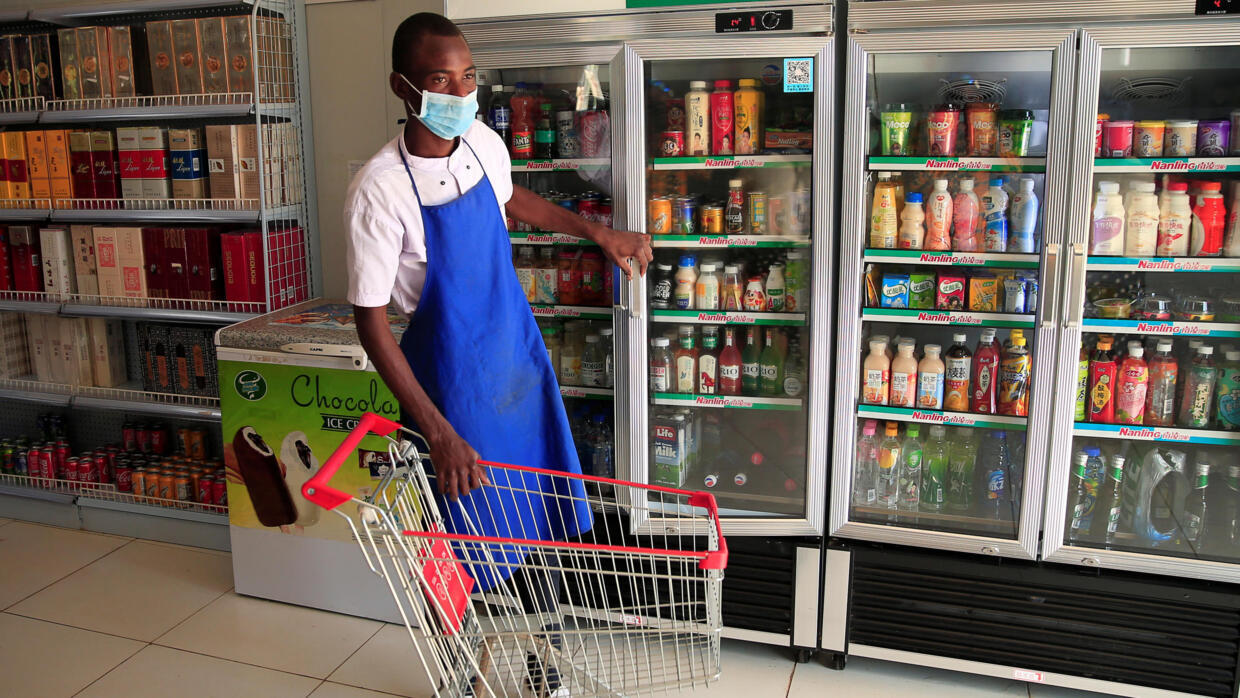
But police spokesman Paul Nyathi said “action will be taken” against supermarkets and stores selling alcohol.
“We have realised that people who buy alcohol at supermarkets are giving us challenges. They buy and drink as groups, be it either in their vehicles or places of residence thereby defying social distancing,” he said in comments published by the state-run Herald.
Roadblocks and fines
President Emmerson Mnangagwa declared Covid-19 a national disaster on 17 March and the authorities and aid groups are trying to piece together a response plan to the disease, hoping the lockdown will give them the chance to get ahead of the infection curve.
Zimbabwe has so far only recorded nine cases of the coronavirus, one of them fatal.
There's been an increase this week in the number of roadblocks around the capital Harare.
But not all of them are genuine. Residents reported a bogus roadblock set up on Thursday by seven fake police officers who were stopping motorists in the city’s affluent Quininngton suburb.
Fines for those arrested at bonafide checkpoints are between seven and 18 euros.
It is now quite clear from the pictures I am receiving that @PoliceZimbabwe is not taking seriously how their officers are also at risk of getting infected with the Coronavirus.
— Hopewell Chin’ono-Journalist (@daddyhope) April 2, 2020
If ZRP knew what I now know about the correct figures, they wouldn’t be playing with their lives! pic.twitter.com/cSlXY8GjZk
Not keeping their distance
Police have come in for criticism for cramming those arrested onto the back of police trucks with no regard to social distancing.
Amid a serious food shortage, Zimbabweans are also queuing up outside shops when there are rare deliveries of the staple maize meal.
The non-profit group, the Centre for Innovation and Technology tweeted pictures of shoppers queuing Friday outside a supermarket in Tshabalala, a low-income suburb in the second city of Bulawayo.
After poor rains and harvests, the UN on Thursday launched an appeal for 715 million US dollars to fund a Humanitarian Response Plan for the country. The plan aims to support 5.6 million people here with food and other aid, but also to mitigate the impact of Covid-19.
#Day5 #LockdownZW : People are queued up at Machipisa Supermarket in Tshabalala awaiting mealie-meal delivery.
— Cite (@citezw) April 3, 2020
Tell us what is happening in your area. #Asakhe pic.twitter.com/Ez1sBuMYCR
Humanitarian crisis
After severe drought and a prolonged economic crisis, the disease is expected to hit Zimbabwe hard. The International Monetary Fund said Friday that the Covid-19 pandemic had worsened the country's outlook and without scaled-up donor support "the risks of a deep humanitarian crisis are high."
But there is widespread concern over the slow rate of testing; only 316 tests for coronavirus have been conducted so far. Yet more than 13,000 Zimbabweans have returned home in recent days from neighbouring South Africa, which has recorded five deaths and more than 1,400 cases.